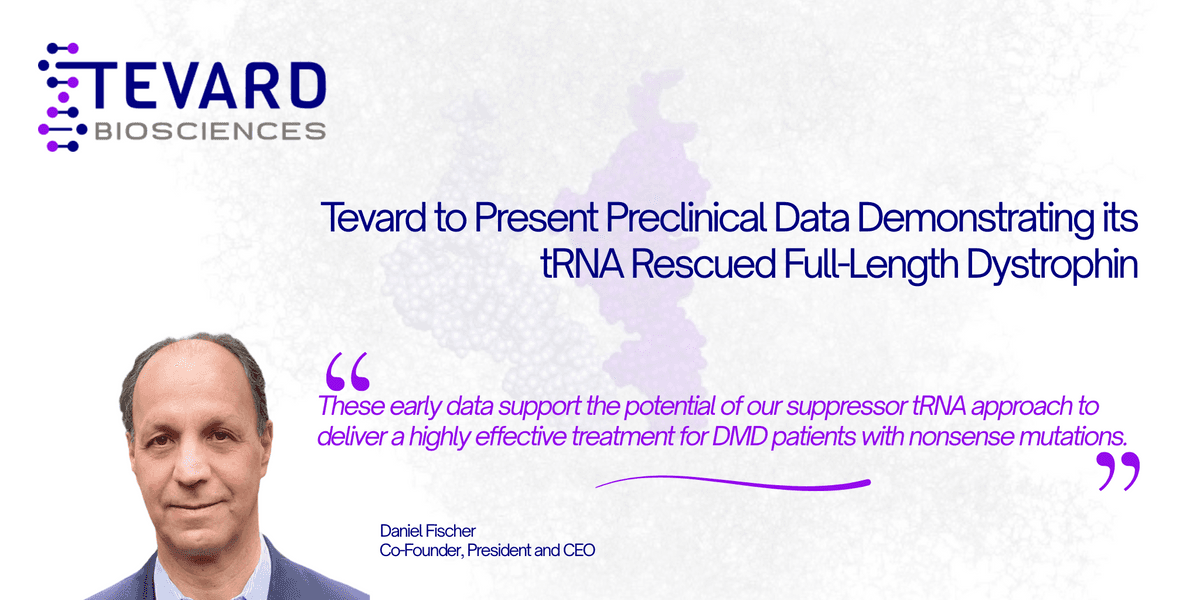
Researchers at Tevard Biosciences have revealed promising preclinical results for a novel therapeutic approach targeting Duchenne Muscular Dystrophy (DMD), a devastating genetic disorder characterized by progressive muscle degeneration.
The study, to be presented at the American Society of Gene and Cell Therapy Annual Meeting, showcased a tRNA-based therapy that successfully rescued full-length dystrophin protein in a mouse model. By using an AAV-tRNA therapeutic, the research team demonstrated significant potential in addressing nonsense mutations that affect approximately 15% of DMD patients.
Key findings include dose-dependent expression of full-length dystrophin protein and notable improvements in motor function. At 12 weeks post-treatment, mice exhibited increased latency time in rotarod performance tests and significantly enhanced forelimb and hindlimb grip strength. Critically, the treatment showed no evidence of adverse effects.
This approach is particularly significant because existing therapeutic strategies have struggled to restore full-length dystrophin due to the protein's large size and mutation diversity. By utilizing suppressor tRNAs that can read through premature termination codons, Tevard's method offers a potentially transformative strategy for DMD treatment.
The research suggests broader implications for genetic therapies, particularly for disorders caused by nonsense mutations. With only three possible premature termination codons, this approach could potentially be adapted to treat a wide range of genetic conditions.
Duchenne muscular dystrophy, a fatal X-linked disorder, progressively destroys muscle function and leads to respiratory and cardiac complications. Tevard's innovative approach represents a critical step toward developing more comprehensive treatments for this challenging genetic disease.