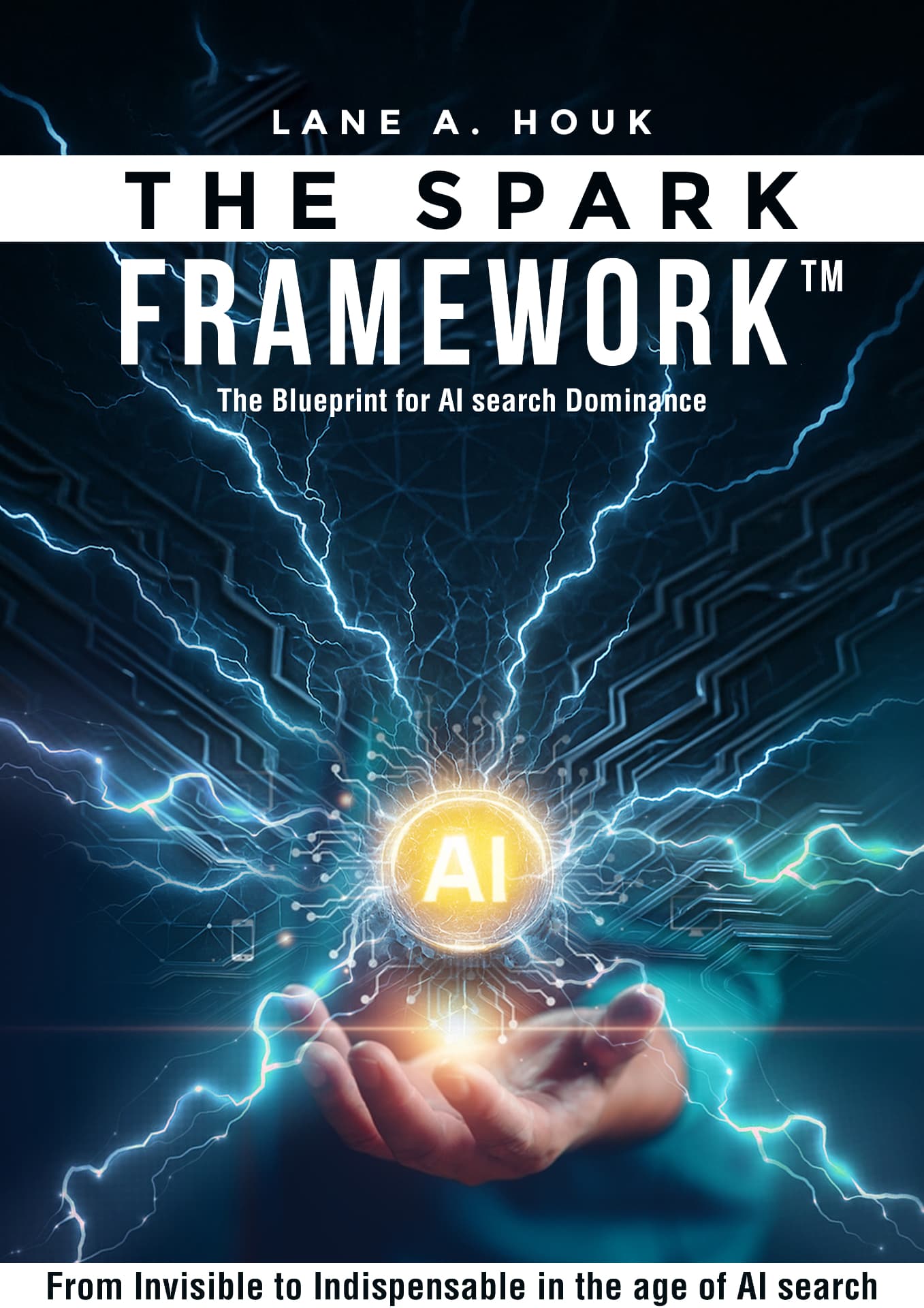
The digital landscape is undergoing its most significant transformation since the advent of search engines, with traditional search usage declining at unprecedented rates while AI assistants gain 800 million weekly users. According to research compiled in The SPARK Framework: The Blueprint for AI Search Dominance, this shift threatens to render 67% of businesses effectively invisible to the growing audience using AI tools for information discovery.
Lane Houk, author of the new book, explains that companies investing heavily in traditional SEO are optimizing for a platform that's hemorrhaging users at the fastest rate in internet history. The data reveals startling trends: ChatGPT exploded from 400 million to 800 million weekly users in just eight months, while Google's general search market share plummeted from 73% to 66.9% between February and August 2025. Perhaps most tellingly, 43% of all searches now start with AI assistants instead of traditional search engines.
The fundamental problem lies in how AI assistants operate differently from traditional search engines. While SEO focused on ranking in Google's top results, AI assistants don't show rankings—they cite sources. Companies with perfect Google rankings are finding themselves getting zero mentions in AI responses, effectively making them invisible to the growing AI search audience. This explains why businesses spending $5,000-50,000 monthly on SEO are experiencing declining leads despite maintaining traditional search visibility.
The book introduces Answer Engine Optimization (AEO), a new discipline that combines advanced traditional SEO strategies with tactics specifically addressing LLM visibility. Unlike theoretical frameworks, The SPARK Framework provides a month-by-month implementation system that's already generating dramatic results for early adopters, including 150-300% traffic increases from AI-driven search and 50-100+ AI citations monthly across platforms like ChatGPT, Perplexity, and Google AI Overviews.
The implementation system breaks down into 12 monthly phases, each with specific, actionable tasks. Month 1 focuses on emergency protocol and foundation setup, followed by semantic optimization and entity mapping in Month 2, platform authority building across AI ecosystems in Month 3, and answer readiness implementation in Month 4. Months 5-12 cover advanced technical optimization, content scaling, competitive intelligence, and future-proofing strategies.
Perhaps the most urgent aspect of this transformation is the rapidly closing window for early-mover advantage. Businesses implementing AEO now are gaining 12-18 month leads over competitors, with these advantages compounding as AI assistants continue to cite established authorities more frequently than newcomers. The research, available at https://thesparkframework.com, draws from analysis of over 10,000 AI search queries and proprietary data on AI citation patterns.
The implications for businesses across all sectors are profound. Companies that fail to adapt to this seismic shift risk becoming irrelevant to the growing population of users who trust AI assistants for information discovery. With 79% of Americans trusting AI search engines to provide accurate information and 34% of Gen Z users preferring AI chatbots over Google, the transformation represents not just a technological shift but a fundamental change in consumer behavior that demands immediate strategic response from businesses seeking to maintain digital relevance.