

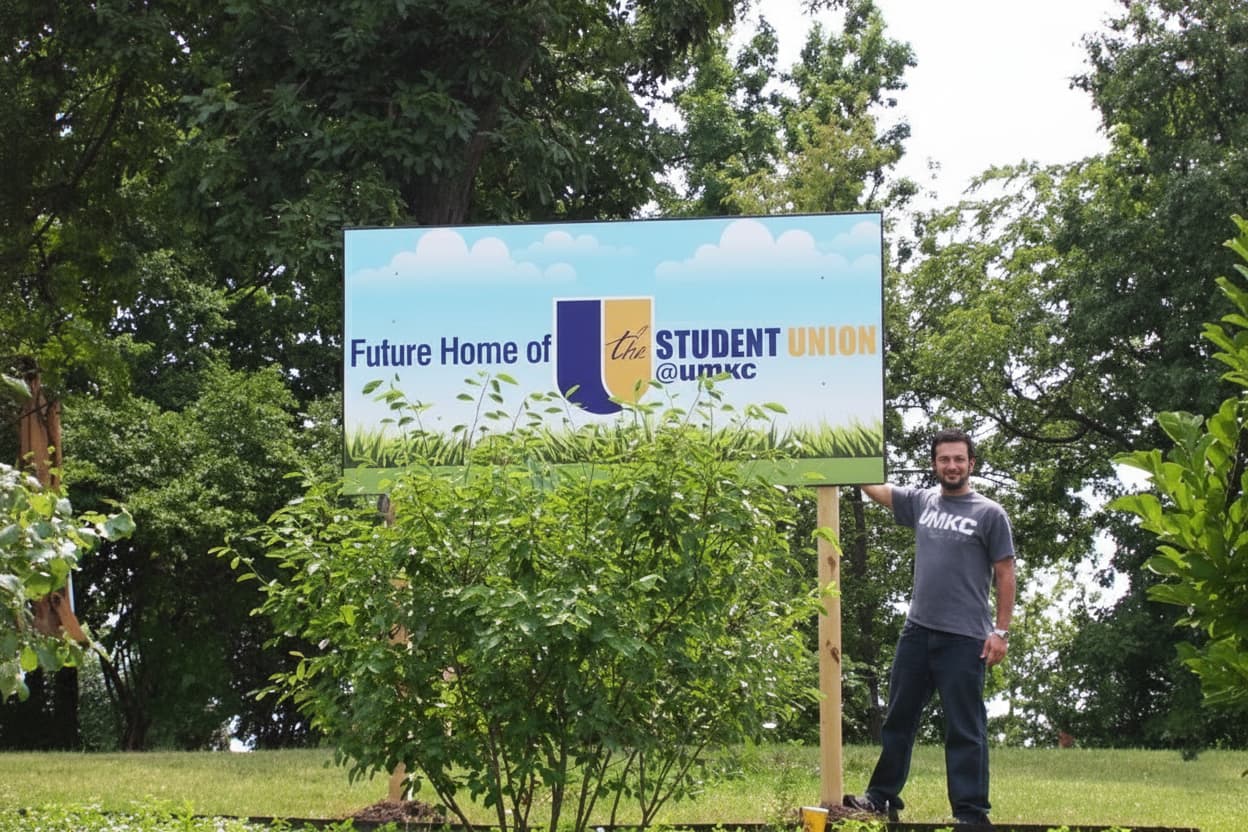
The real estate industry typically draws leadership from finance and property management backgrounds, but Teddy Abdelmalek's path to becoming Senior Vice President of Business Development at HH Red Stone began in a University of Missouri-Kansas City residence hall. His unique trajectory demonstrates how principles of service and empathy learned in student affairs translate directly to improved property performance in the competitive real estate market.
Abdelmalek oversees a national platform managing 7,500 units (10,000 beds) at HH Red Stone, bringing an unconventional perspective shaped by his bachelor's degrees in biology and chemistry combined with a master's in Higher Education. This educational foundation created what he describes as both analytical and relational professional identities that inform his approach to real estate leadership.
A defining moment occurred during his time as a Resident Assistant at Cherry Street Residence Hall when a resident shared that regular check-ins had helped him through a difficult period. "That moment lit the spark that still drives my career today: building environments where people feel supported, connected, and capable of thriving," Abdelmalek recalls. This experience taught him that authentic community represents more than marketing language—it serves as the foundation for resident well-being and property success.
When faced with a student housing portfolio struggling with turnover, Abdelmalek applied his UMKC-learned principles by implementing mentorship programs and resident-driven initiatives. "Within a year, renewals and satisfaction both increased. It was proof that when you put people first, results follow," he explains. This approach aligns with HH Red Stone's philosophy of bridging real estate performance with human-centered management, viewing housing as a platform for community impact rather than merely a business transaction.
Abdelmalek's business development strategy treats properties as living communities rather than financial assets, a perspective that resonates with partners seeking relationships beyond transactions. "My background blends institutional insight with a student-first, results-driven approach," he notes. "That allows me to focus on both the resident experience and measurable real estate performance."
In an industry increasingly focused on technology and operational efficiency, Abdelmalek's journey offers a compelling case for empathy as a sustainable competitive advantage. His experience demonstrates that student affairs principles—servant leadership, resilience, and community building—function as effective business strategies that drive retention, satisfaction, and superior property performance. For more information about the educational institution that shaped this approach, visit https://www.umkc.edu.
"Every success we've achieved ties back to the principles I learned at UMKC," Abdelmalek reflects. His story raises an important question for property owners and operators: whether they are managing properties or building communities that support resident success. This people-first methodology proves particularly relevant in student housing and multifamily real estate sectors where resident experience directly correlates with financial performance metrics.

