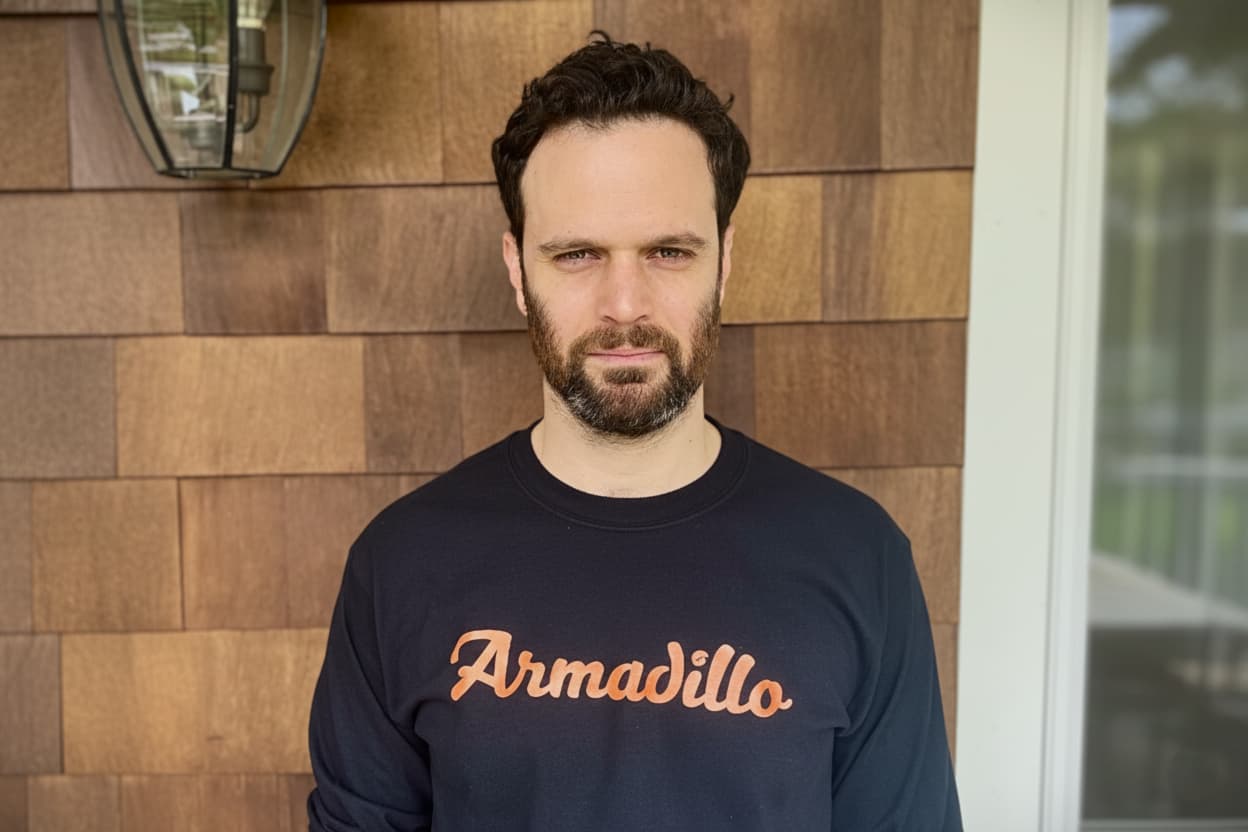
The home warranty industry faces a fundamental credibility crisis, with online reviews consistently documenting negative homeowner experiences. Matan Slagter, CEO and Co-Founder at Armadillo, attributes this reputation problem directly to industry practices that have prioritized technician networks and cost structures over customer experience for decades. Unlike homeowners' insurance, which maintains over 90% attachment rates due to mortgage requirements, home warranty remains optional and widely distrusted.
Slagter's background in traditional insurance at AIG informs Armadillo's unconventional approach, which applies actuarial discipline to ensure products are priced to support both long-term profitability and high-quality service. This mathematical rigor creates capacity for genuine customer care rather than mere cost efficiency, establishing a foundation for sustainable growth where prices reflect real risk and service requirements.
Transparency serves as a core strategic element for Armadillo, not merely a feature. The company drew inspiration from Domino's Pizza's tracking system to address what Slagter identifies as the critical determinant of homeowner satisfaction: communication. "Two homeowners can receive the same thousand dollars for a refrigerator replacement, yet have completely different experiences," Slagter noted. "It comes down to how clearly you communicate, how long people wait, and whether they understand the reasoning behind the decision." This focus on communication addresses significant industry challenges, as home warranty companies must navigate between technicians and homeowners within a fragmented ecosystem requiring integration with contractor systems and parts suppliers.
Armadillo's most radical innovation may be its approach to technician selection, offering homeowners a choice between the company's vetted network or their own trusted technicians—an option no other major player provides upfront. While the traditional industry model negotiated lower rates with technician networks to control costs, this approach frequently generated complaints about long wait times and unprofessional service. Some newer companies attempted the opposite approach with reimbursement-only models for customer-selected contractors. Armadillo's dual-choice model represents a middle path, with data revealing that a significant portion of claims utilize the self-service option. The company built its entire technology stack to support this flexible approach, with systems adapting based on customer selection.
This strategy reflects a deliberate departure from typical startup emphasis on speed alone, instead focusing on responsible growth that creates sustainable value for customers, employees, and partners. The approach combines venture capital urgency with the long-term operating discipline of independently scaled businesses, creating what Slagter describes as a "flywheel" effect—a company designed to endure through robust processes, scalable technology, and sound economics.
The broader context reveals substantial opportunity, with market projections suggesting growth to $13.6 billion by 2030, approximately triple current size. Beyond repair and replacement services, preventive maintenance represents a logical expansion area that could help homeowners maintain systems before failures occur. Slagter observes a recurring pattern across industries where organizations become accustomed to existing practices without questioning whether they remain valid. In a sector burdened by reputation problems, simply asking that question—and being willing to change in response—may represent the most meaningful transformation possible. The home warranty industry requires more than incremental improvements; it needs companies willing to acknowledge past failures, reimagine core assumptions, and build with both profitability and genuine value in mind.