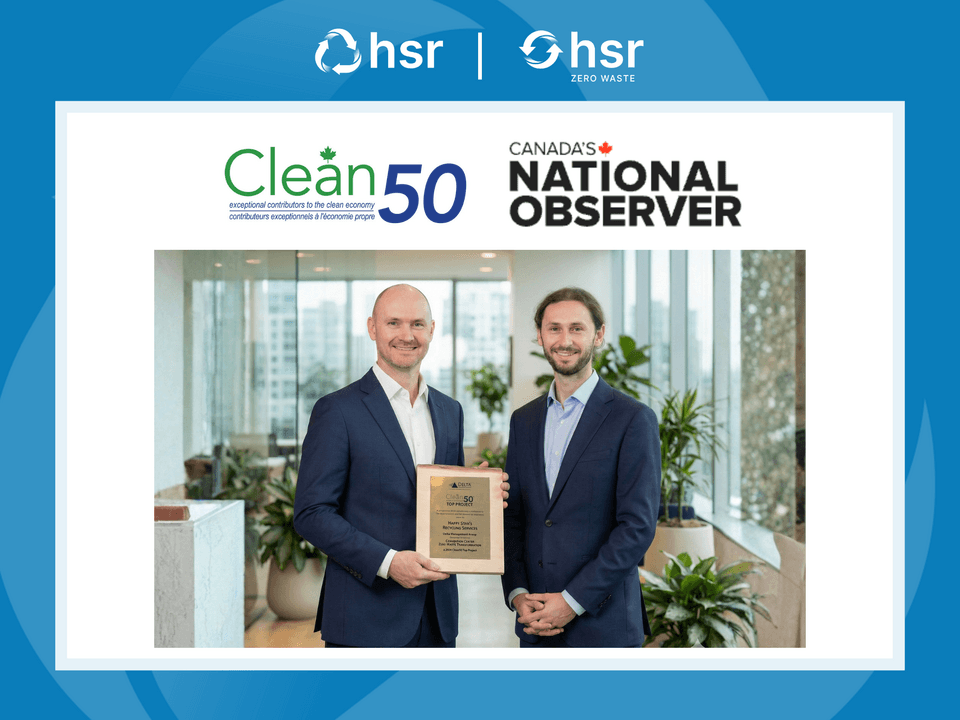
HSR Zero Waste has received national recognition from Clean50 and Canada's National Observer for its leadership in helping organizations transform waste management from an operational challenge into measurable environmental and financial value. The feature, published as part of Clean50's Sponsored Stories series, highlights the company's award-winning approach to zero waste consulting and strategy development, which includes system redesign, data-driven waste audits, and on-site operational optimization.
The article demonstrates how upstream waste reduction can improve diversion rates, lower operational costs, and build long-term resilience for organizations facing fluctuating recycling markets and tightening environmental regulations. Drawing on projects at large-scale venues such as the Convention Centre and Kruger, the feature shows how HSR Zero Waste's methodology delivers tangible results for commercial, industrial, and institutional clients across Canada.
This recognition situates zero-waste programs within Canada's broader clean economy, emphasizing their growing role in cost management, sustainability performance, and regulatory compliance for Canadian businesses. As organizations adapt to rising disposal costs, evolving regulations, and increasing sustainability expectations, zero-waste systems are becoming increasingly important strategic components for operational resilience.
HSR Zero Waste works with clients to design and implement customized zero-waste programs that improve operational performance while advancing sustainability goals. Through a combination of strategic planning, operational execution, and continuous performance tracking, the company delivers scalable solutions that help organizations reduce landfill dependency and strengthen environmental leadership. The company's approach is detailed in their online resources available at https://www.hsrzerowaste.com.
The implications of this recognition extend beyond individual organizational success to broader industry and environmental impacts. As more businesses adopt comprehensive zero-waste strategies, Canada moves closer to circular economy goals while organizations benefit from reduced operational expenses and improved regulatory compliance. The feature in Canada's National Observer serves as a case study for how data-driven waste management can create both environmental and financial value simultaneously.
For readers in the business, non-profit, and government sectors, this news matters because it demonstrates proven approaches to addressing waste management challenges that many organizations face. The growing importance of zero-waste systems reflects broader shifts in how Canadian organizations approach sustainability, moving from compliance-driven initiatives to strategic programs that deliver measurable returns on investment while advancing environmental stewardship.