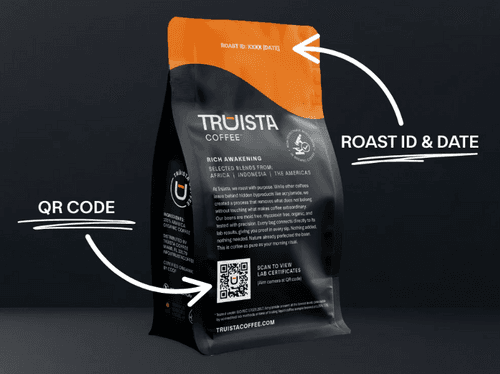
Truista Coffee, an organic coffee brand built on transparency and third-party verification, has officially launched nationwide. The company's first production release occurred on September 29, 2025, coinciding with National Coffee Day and marking both the public debut of the brand and the birthday of its founder. This launch represents a significant development in the coffee industry, particularly for consumers increasingly concerned about product purity and transparency.
The company has established what it calls a "clean coffee" standard that is both doctor-recommended and lab-verified. Truista Coffee prioritizes purity through direct farm sourcing and innovative roasting methods specifically designed for health-conscious consumers. This approach addresses growing consumer demand for products with verified safety and quality standards, moving beyond traditional organic certifications to provide more detailed information about what exactly is in their coffee.
Every bag of Truista Coffee features a QR code that links directly to batch-specific lab results, allowing consumers to verify the purity of their specific purchase. This level of transparency represents a new standard in the coffee industry, where consumers typically have limited information about potential contaminants or processing methods. The company's proprietary processing methods are designed to reduce contaminants while simultaneously preserving flavor and antioxidants, addressing two key consumer priorities that are often seen as competing objectives.
Truista Coffee is powered by a global collaboration of farmers, processors, and scientists, creating what the company describes as health-forward innovation from seed to sip. The founder's journey from home brewing to deep exploration of coffee led to this transparent brand concept, which now offers consumers unprecedented access to information about their coffee's origins and composition. This model could potentially influence broader industry practices as consumers increasingly demand similar transparency from other food and beverage companies.
The implications of Truista's launch extend beyond individual consumer choice to potentially reshape industry standards. As more consumers seek verified information about product purity, other coffee companies may face pressure to adopt similar transparency measures. The company's approach of combining direct farm sourcing with scientific verification creates a new benchmark for what constitutes "clean" coffee, potentially influencing regulatory discussions and industry best practices. For health-conscious consumers, this represents access to coffee with verified purity standards, while for the industry, it signals a shift toward greater transparency and scientific verification in product claims.