Lionheart Health, Inc., in collaboration with Leonhardt Ventures LLC, has received a Letter of Allowance from the United States Patent and Trademark Office for its patent application covering a bioelectric stimulation system that modulates Growth Differentiation Factor 10 (GDF10) and Brain Derived Neurotrophic Factor (BDNF). The allowed claims cover a low-voltage, pulsed bioelectric stimulation system programmed to upregulate the expression and release of these proteins in target tissues, using direct current positive polarity between 2 mA to 4 mA, with optimized stimulation at approximately 3 mA.
The patent also includes programmable stimulation to enhance expression of complementary regenerative proteins including Klotho, stromal cell-derived factor 1 (SDF1), and insulin-like growth factor 1 (IGF-1). GDF10 has been identified in preclinical research as a signaling protein associated with axonal sprouting and neural network repair following ischemic stroke. The company's patented bioelectric platform is designed to stimulate endogenous repair pathways without systemic drug exposure.
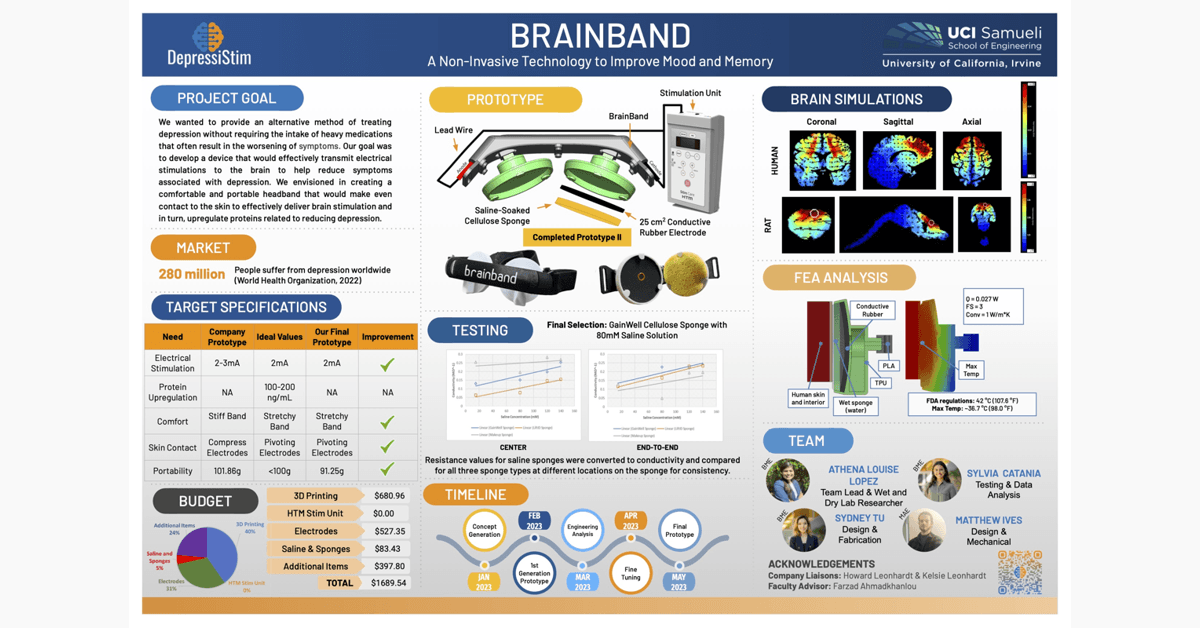
Lionheart Health has completed pre-clinical animal studies and a pilot clinical study in Brazil utilizing its Brain Band™ platform incorporating GDF10 and BDNF signaling protocols. The pre-clinical studies, conducted with AccuLab Life Sciences and supported by a University of California Irvine Capstone Research Grant, demonstrated measurable modulation of regenerative signaling pathways and confirmed activation of neuroplasticity-related proteins. The pilot clinical study in Brazil showed participants receiving non-invasive bioelectric brain stimulation demonstrated improvements in cognition, memory, and mood, along with reduction in depression symptoms.
Brain Band™ programming included DepressiStim™, MemoryStim™, CerebraCell™, and AddictiStim™ protocols and forms part of Lionheart Health's KLOTHO-UP Study currently competing in the Semi-Finals of the $101 million XPRIZE Healthspan competition. The patent disclosure outlines numerous potential investigational applications across multiple health domains.
For neurological and brain health, potential applications include stroke rehabilitation, traumatic brain injury recovery, and investigational approaches to Alzheimer's disease, Parkinson's disease, essential tremors, anxiety disorders, and brain cancer adjunct therapy. Muscle and mobility health applications encompass post-stroke motor recovery, functional strength improvement, gait speed enhancement, 6-minute walk performance improvement, and sarcopenia mitigation.
The patent also covers immune and regenerative resilience applications focusing on tissue repair coordination, inflammatory resolution support, cellular recovery signaling, and organ resilience after injury. Vascular and circulatory health applications include vascular remodeling research, endothelial repair signaling, and post-ischemic tissue recovery. Additional investigational applications target liver and metabolic health, with mechanistic rationale including TGF-β superfamily involvement in hepatic regeneration, hepatic tissue remodeling pathways, fibrosis modulation research, and metabolic resilience enhancement.
Additional tissue targets mentioned in the patent include retina, cochlea, bone, adipose tissue, lung, prostate, uterus, spleen, and other organs. Howard J. Leonhardt, Executive Chairman of Lionheart Health, stated that this allowance represents a significant milestone in the company's mission to harness bioelectric signaling to activate the body's own regenerative repair systems. The issuance of this patent strengthens Lionheart Health's expanding intellectual property portfolio in bioelectric regenerative medicine and supports the company's multi-protein regenerative platform strategy. More information about the company's technologies can be found at https://www.LionheartLongevity.com and https://www.LionheartHealthStim.com.