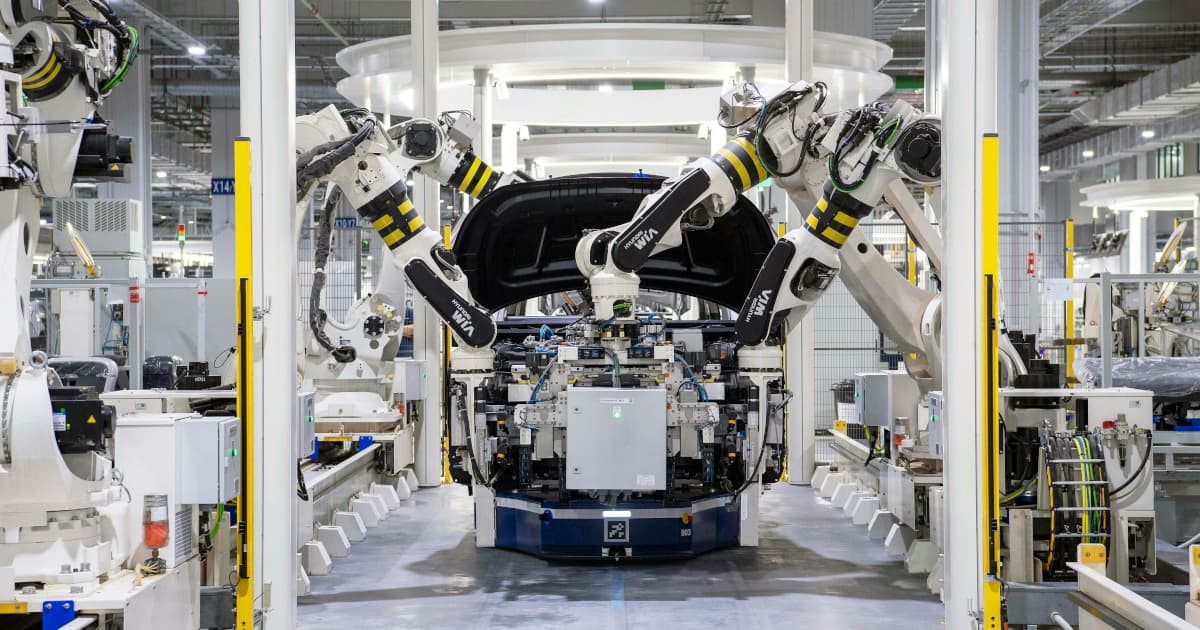
Chinese technology company Xiaomi has conducted a pilot trial using humanoid robots during electric vehicle assembly at its Beijing plant. The bipedal machines operated for three hours of active production work, achieving a task completion rate above 90%. This implementation represents one of the first instances of humanoid robots being deployed on a working factory floor for manufacturing purposes.
The trial demonstrates progress toward practical automation in industrial settings, an area where promises have been made for years without widespread implementation. The successful completion rate suggests humanoid robots may be approaching readiness for more regular integration into manufacturing processes. This development could signal a shift in how electric vehicles and other complex products are assembled, potentially reducing reliance on human labor for certain repetitive or hazardous tasks.
Other electric vehicle manufacturers, including publicly traded companies like Massimo Group (NASDAQ: MAMO), are likely monitoring these developments as they consider their own automation strategies. The electric vehicle industry has been at the forefront of manufacturing innovation, with companies seeking competitive advantages through technological advancements in production efficiency and quality control.
The implications extend beyond Xiaomi's operations to the broader manufacturing sector. Successful implementation of humanoid robots could influence labor markets, production costs, and workplace safety standards across multiple industries. As automation technology advances, manufacturers may face decisions about balancing technological efficiency with workforce considerations.
This development comes as the electric vehicle market continues to expand globally, with manufacturers seeking ways to scale production while maintaining quality standards. The integration of advanced robotics could potentially address some of the challenges associated with rapid production scaling, though questions remain about implementation costs, maintenance requirements, and long-term reliability.
The information about this development was distributed through specialized communications platforms focused on the electric vehicle and green energy sectors. These platforms provide access to distribution networks and content syndication services for companies seeking to reach investors, consumers, and industry observers. More details about these communication services can be found at https://www.GreenCarStocks.com, with additional information available at https://www.GreenCarStocks.com/Disclaimer regarding terms of use and disclaimers applicable to published content.