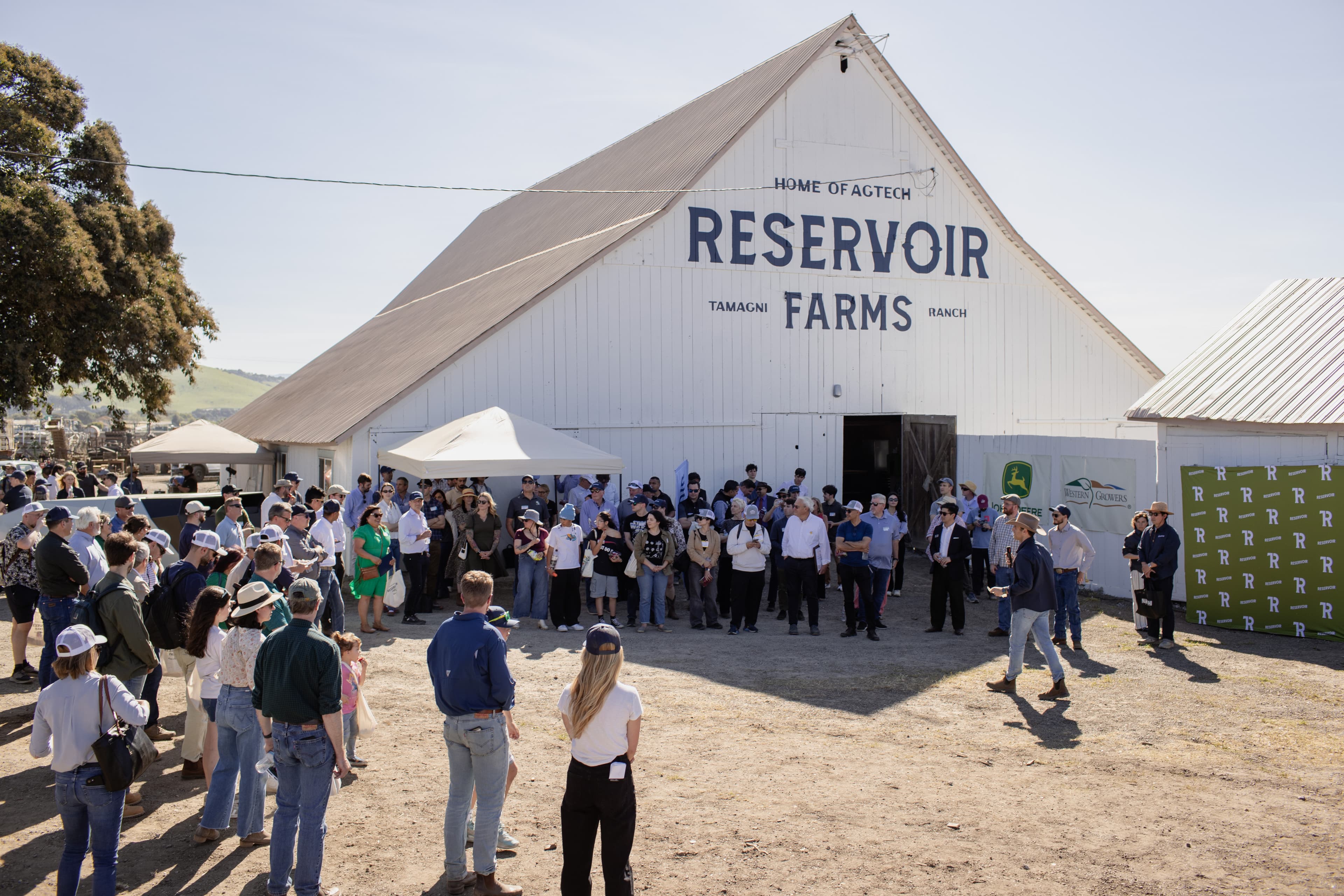
Reservoir officially opened Reservoir Farms - Salinas, its flagship on-farm innovation hub for specialty crops, on March 17, 2026. The facility transforms the company's vision for an on-farm agricultural technology innovation center into operational reality, featuring multiple innovation barns and 24 acres of dedicated commercial test fields. This creates what Reservoir describes as the most concentrated ecosystem of technology leaders, growers, and startups in agriculture, designed to rapidly scale solutions for global food production challenges.
The Salinas Valley location positions the innovation center at the heart of California's specialty crop production, where lettuce, strawberries, broccoli, and other high-value crops face increasing pressures from labor shortages, water constraints, and climate variability. By situating research and development directly within commercial farming operations, Reservoir aims to bridge the gap between technological innovation and practical farm implementation that has historically slowed agricultural technology adoption.
Key partners contributing to the initiative include major agricultural corporations and organizations such as John Deere, Western Growers, the State of California, Nutrien Ag Solutions, Netafim, Tanimura & Antle, and Naturipe Berry Growers. These partners provide equipment, agronomic expertise, workforce programming, and research and development support to help transform promising concepts into practical tools for commercial farms. Educational institution Hartnell College also participates, contributing to workforce development programs that prepare the next generation of agricultural technicians and innovators.
The opening of Reservoir Farms - Salinas represents a significant development in agricultural technology infrastructure, particularly for specialty crops that have received less technological investment than commodity crops like corn and soybeans. Specialty crops present unique challenges for mechanization and automation due to their delicate nature, varied harvesting requirements, and complex growing conditions. The innovation center's focus on these crops addresses a critical gap in the agricultural technology landscape.
Reservoir operates both as an agricultural innovation center and a venture capital fund, backing startups that solve real problems in high-value crops and what the company terms "the rugged physical AI stack." By combining research and development space, hands-on grower input, and early-stage capital, Reservoir aims to accelerate the development cycle from concept to commercial implementation. The company plans to expand its on-farm robotics innovation centers to other key regions across California and the American West following the Salinas Valley launch.
The implications of this development extend beyond the immediate agricultural community to broader food system challenges. As global population growth increases demand for fresh produce and climate change threatens traditional growing regions, innovations in specialty crop production become increasingly critical. The concentrated ecosystem at Reservoir Farms - Salinas could accelerate solutions for water efficiency, reduced chemical inputs, labor optimization, and yield improvement in crops that constitute significant portions of consumer diets and agricultural economies.
For growers, the innovation center offers direct access to emerging technologies and the opportunity to influence development toward practical, economically viable solutions. For technology companies and startups, it provides real-world testing environments and immediate feedback from commercial operators. This collaborative model represents a shift from traditional agricultural research approaches that often occur in isolation from working farms.
The establishment of Reservoir Farms - Salinas comes at a pivotal moment for California agriculture, which faces regulatory pressures, environmental challenges, and competitive global markets. By creating infrastructure specifically designed to foster innovation in specialty crops, Reservoir addresses systemic barriers to technological advancement in this sector. The success of this model could influence agricultural innovation approaches worldwide, particularly in regions specializing in high-value, labor-intensive crops.