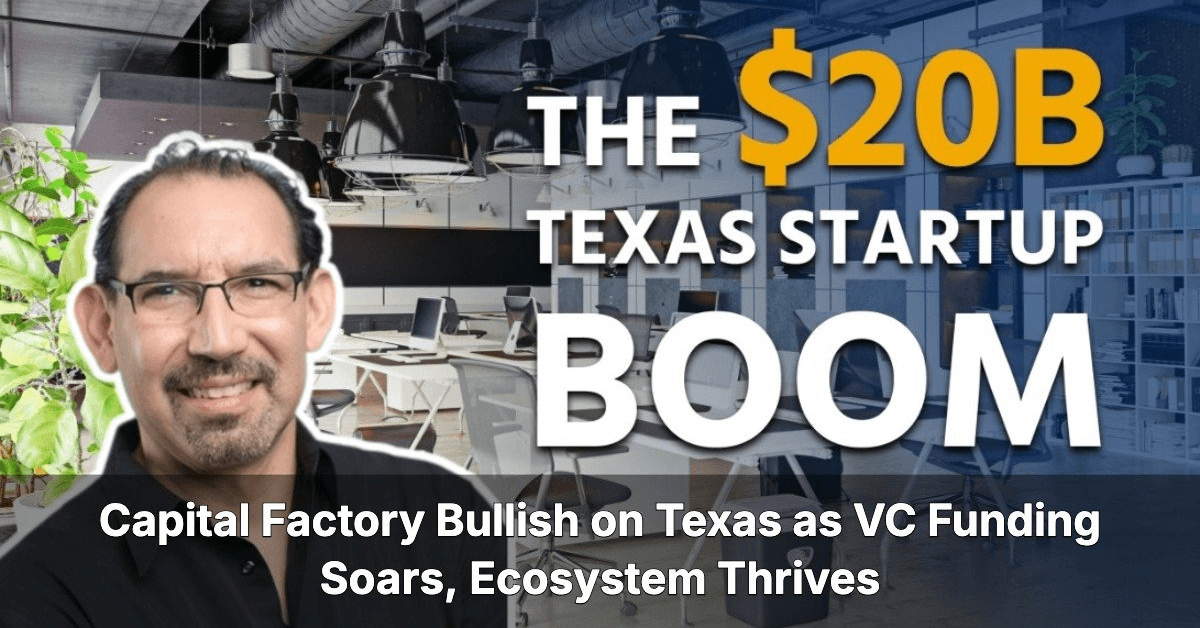
Texas has emerged as a dominant force in venture capital investment, with the state attracting nearly $20 billion in funding during 2025 according to Capital Factory leader Luis Martinez. Austin led this growth with nearly $8 billion in VC fundraising, placing it among the top five cities nationally for venture capital activity. Houston and Dallas-Fort Worth also showed significant growth, contributing to what Martinez predicts will be "a banger year" for Texas VC in 2026.
The state's innovation momentum is driven by several key sectors that are attracting substantial investment. Texas has become a hub for automation and robotics, featuring innovations like Waymo's self-driving cars and humanoid robots. The space industry represents another major growth area, with Texas hosting leaders like Blue Origin, Intuitive Machines, and Firefly. The inaugural Space Summit scheduled for September in San Antonio is expected to further galvanize what Martinez describes as a "red hot" sector.
Energy innovation represents another critical area of growth beyond traditional oil and gas. Texas is investing heavily in solar energy and is "very bullish" on nuclear energy, including small modular reactors and fusion technology, to meet the demands of AI data centers and new industries. Healthcare and life sciences are also experiencing growing activity across the state through collaborations with institutions like MD Anderson, Baylor College of Medicine, and UT Southwestern, supported by public initiatives like CIPRI for cancer research and DeepRIT for neurodegenerative diseases.
Hard tech and industrials represent another significant area of innovation, with Texas seeing substantial hardware development across sectors including chemicals, automotive—highlighted by Toyota's presence—aerospace, and advanced materials. Martinez emphasized that while Texas's favorable tax structure and efficient regulatory frameworks are major attractants for businesses, the true "special sauce" lies in three key advantages.
The state benefits from critical mass through a high concentration of established founders, companies, and talent who are on their second, third, or even fourth successful ventures. Texas also enjoys a collaborative ecosystem that differs from other major tech hubs, with "natural flows of talent, people, and relationships" across its major cities fostering genuine regional cooperation among angel networks like CTAN, Houston Angel Network, North Texas Angel Network, and Alamo Angels, along with economic development corporations and universities. Strategic public investment through initiatives like CIPRI, DeepRIT, and the Texas Space Commission helps de-risk and catalyze private investment in key sectors.
The implications of Texas's venture capital growth extend beyond immediate economic impact. The state's ability to attract nearly $20 billion in funding positions it as a serious competitor to traditional tech hubs like Silicon Valley, potentially reshaping national innovation patterns. The collaborative ecosystem model Texas has developed could serve as a blueprint for other regions seeking to build sustainable innovation economies. For entrepreneurs and investors, Texas offers access to established networks, supportive public-private partnerships, and diverse sector opportunities from space exploration to healthcare innovation. The full interview offering deeper insights into Texas's innovation strategy is available at https://buildingtexasshow.com.