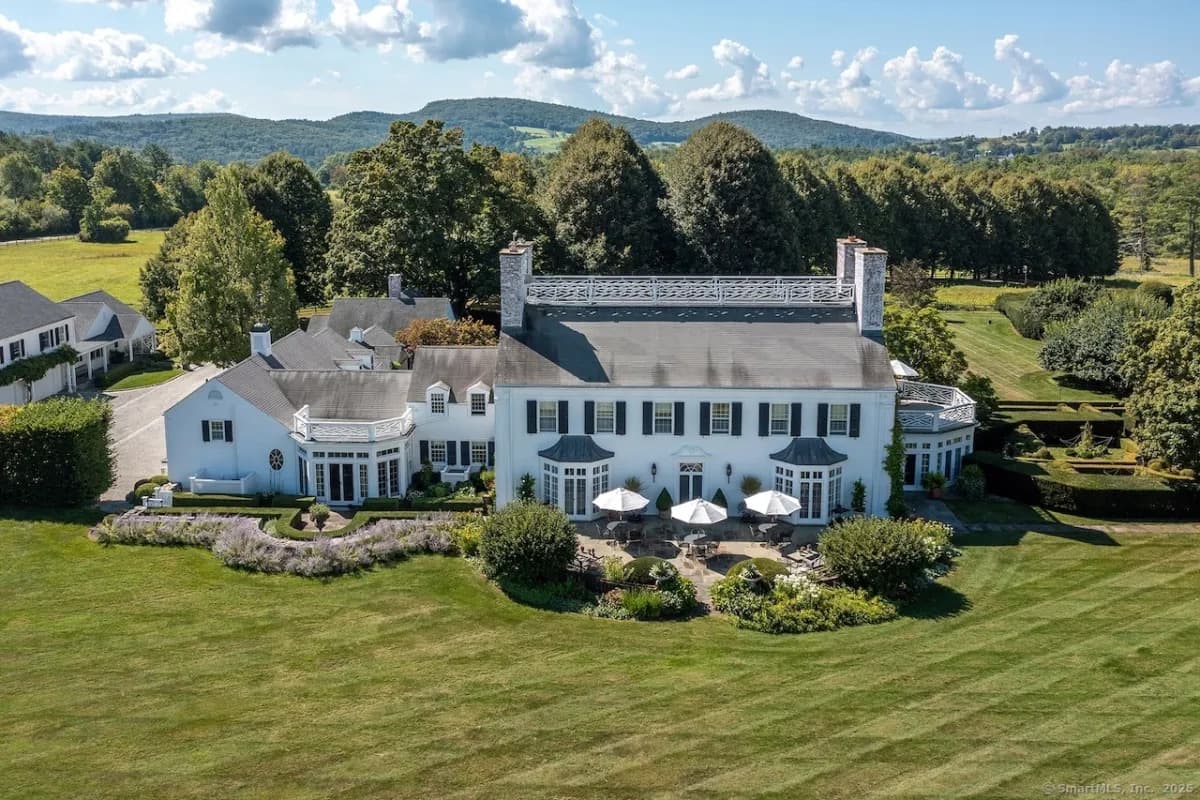
In luxury real estate discussions, the concept of value often fades above the $3 million threshold, but specialist Bill Melnick of Elyse Harney Real Estate contends it remains paramount. His listing of Linden Hill Farm in Salisbury, Connecticut, priced at $8,875,000, exemplifies this perspective. The 1929 Georgian Revival estate spans over 71 acres and includes a heated pool, lighted tennis court, guest house, two caretaker apartments, seven fireplaces, a 1,000-bottle wine cellar, and renowned gardens. The property, owned by a noted interior designer, offers turnkey interiors and historical architectural elements like mature linden trees and stone terraces that Melnick argues provide irreplaceable value.
Melnick's listing reflects broader market dynamics in Litchfield County and the tri-state region, where luxury sales above $3 million have increased from a few annually pre-pandemic to dozens now. Buyers in this segment increasingly seek full-time residences rather than weekend retreats, prioritizing turnkey presentation, views, pools, and separate guest accommodations. These features command measurable premiums, indicating that value perception extends beyond mere price to encompass condition, amenities, and lifestyle utility.
Market conditions further underscore the importance of value. Melnick notes that spring 2026 inventory at the market's top tier is delayed due to an exceptionally long winter, creating a bottleneck of serious buyers awaiting listings. He anticipates an explosion of activity in coming weeks, stating buyers are present but listings are lagging. This suggests the upper-tier luxury market is not cooling but building pressure, with properties offering genuine value at scale, like Linden Hill Farm, positioned to transact quickly when inventory releases.
The implications for investors and market observers are clear: value remains a critical differentiator even in high-price segments, driven by buyer demand for move-in-ready properties with premium amenities. As inventory constraints persist, well-presented estates that combine historical charm, modern comforts, and functional spaces like guest houses may see accelerated interest. Melnick's emphasis on value challenges assumptions that luxury markets operate independently of worth considerations, highlighting instead how discerning buyers evaluate tangible benefits relative to price.