BioUtah participated in the Biotech Across America State Symposium in Washington, D.C. on March 25, focusing on the strategic importance of robust state and local biotechnology ecosystems for national security and economic resilience. The symposium represents a continuation of the National Security Commission on Emerging Biotechnology's Biotech Across America Roadshow initiative, which aims to highlight biotechnology developments across the country.
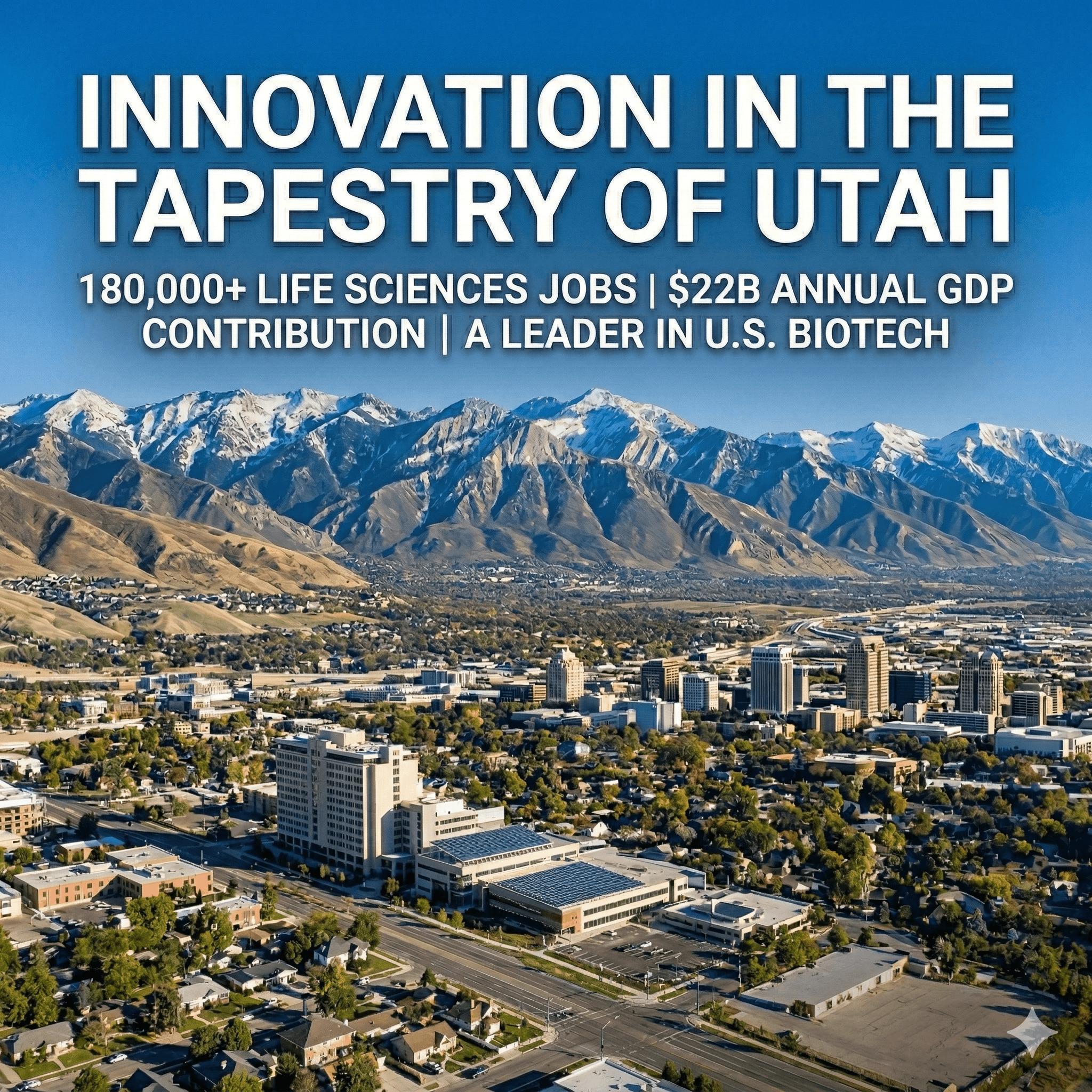
The discussion emphasized how regional biotechnology clusters contribute to broader national objectives. Utah's biotechnology sector serves as a notable example, having received recognition as a startup-friendly state while supporting approximately 180,000 life sciences jobs and generating $22 billion in gross domestic product. These economic contributions demonstrate how state-level innovation ecosystems can bolster national capabilities in critical technology sectors.
The symposium builds upon work by the National Security Commission on Emerging Biotechnology, which published a comprehensive report in April 2025 containing recommendations for congressional and federal government action. The Commission's mandate focuses on advancing and securing biotechnology, biomanufacturing, and related technologies for U.S. national security interests while preparing the country for what it terms the "bioindustrial revolution." More information about the Commission and its report is available at biotech.senate.gov.
Additional organizations involved in supporting biotechnology development include the Engineering Biology Research Consortium, a nonprofit public-private partnership dedicated to advancing engineering biology to address national and global needs, and the Federation of American Scientists, which works to ensure scientific and technical expertise informs policymaking. The Federation of American Scientists maintains information about its work at fas.org.
BioUtah represents Utah's life sciences industry as an independent trade association with member companies spanning medical device manufacturing, research and testing, biotechnology, biopharmaceuticals, and diagnostics. The organization provides additional information about its activities at bioutah.org. The participation of state-level organizations like BioUtah in national discussions reflects growing recognition of how regional innovation hubs contribute to broader strategic objectives in biotechnology development and security.
The implications of these discussions extend beyond immediate economic considerations to encompass national security preparedness. As biotechnology becomes increasingly central to both economic competitiveness and security concerns, the integration of state-level ecosystems into national strategy becomes more critical. The symposium's focus on connecting local innovation with federal policy objectives suggests a growing awareness of the need for coordinated approaches to biotechnology development across different levels of government and industry.