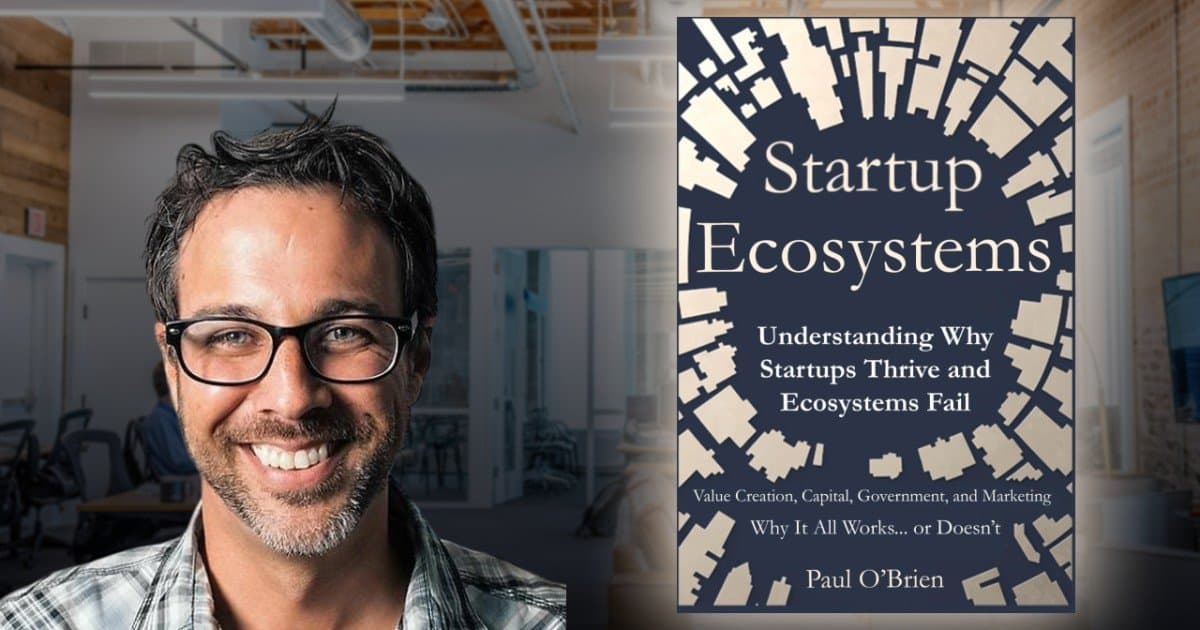
During a live broadcast from South by Southwest (SXSW) 2026 on The Building Texas Show, startup ecosystem expert Paul O'Brien launched his new book, 'Startup Ecosystems,' offering insights into building the innovation hubs that drive modern economies. The interview, conducted amidst the festival's decentralized format across Austin, served as a masterclass for founders, brands, and economic developers seeking to cultivate thriving entrepreneurial environments.
O'Brien described the 2026 festival as a quintessential Texas experience, noting that with the Austin Convention Center closed for expansion, SXSW has spread from I-35 to West 6th Street and as far north as US-183. This wider footprint has encouraged deeper exploration of Austin's creative venues and signature houses, demonstrating the city's adaptability as a global innovation leader. For those targeting SXSW 2027, O'Brien emphasized that success requires long-term strategy, with experienced participants beginning planning as early as October or November to secure prime venues and build meaningful relationships before schedules become locked.
Drawing on 15 years of Silicon Valley experience, including roles at Yahoo and as an entrepreneur-in-residence in venture capital, O'Brien has spent over 15 years shaping the Texas startup landscape. He has been instrumental in bringing foundational programs like Founder Institute, MassChallenge, and Techstars to the state. His book, 'Startup Ecosystems,' serves as a modern blueprint for cities and regions, moving beyond basic playbooks to advocate for intentionally designed ecosystems that integrate venture studios, diverse funding models, supportive policy, and deep university partnerships.
A pivotal insight from the interview was O'Brien's challenge to traditional economic development metrics. He argued that measuring success by immediate job creation is flawed for startup ecosystems, which require years to scale. Instead, he introduced the concept of optionality—the ability for talent to move fluidly between startups, established companies, and new opportunities within the same region. Optionality thrives when ecosystems develop deep sector specializations, such as in semiconductors or aerospace, creating a professional network that retains talent even if individual ventures fail. O'Brien explained that without optionality, regions experience brain drain, urging leaders to build sector depth to foster a resilient and innovative workforce.
O'Brien emphasized that SXSW's unique convergence of technology, film, and music creates a global nexus for serendipitous collisions. He highlighted the strategic value of state and country houses, like New Mexico House and Tennessee House, as essential platforms for building soft-landing programs and cross-border partnerships. His networking advice for attendees is to avoid the hard sell, focus on brief memorable exchanges, suggest concrete follow-ups, and keep moving to maximize connections. He pointed to the natural synergy between Texas and New Mexico, where complementary strengths in research at institutions like Sandia Labs and commercial application can position the Southwest as a global tech leader.
While acknowledging the permanence of remote work, O'Brien stressed that in-person interaction remains irreplaceable for sparking innovation. He advocates for balanced hybrid models that preserve the creative energy of physical collaboration while offering the flexibility of modern work. O'Brien's new book, 'Startup Ecosystems,' is now available on Amazon, serving as a definitive guide for founders, investors, and city leaders committed to building future economies. The full interview can be viewed on The Building Texas Show's YouTube Channel.