

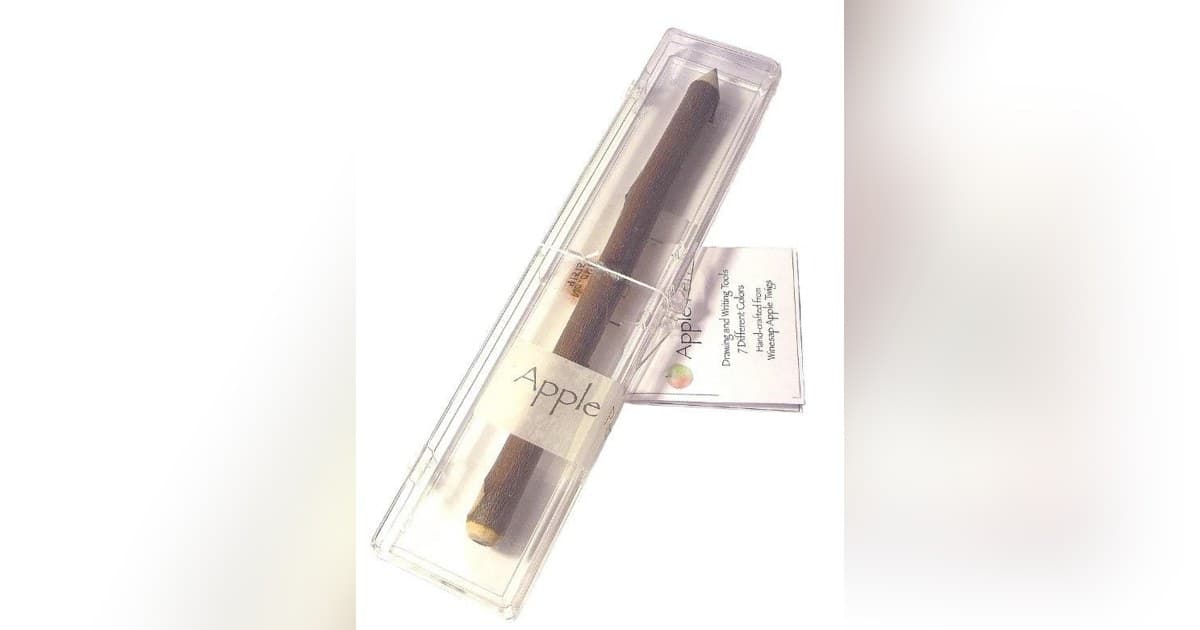
Artist H.M. Peavy has introduced a collection of handcrafted No. 2 graphite and colored drawing pencils made entirely from seasonal winter prunings harvested from mature Winesap apple trees. The release brings a zero-waste approach to fine art tools and sustainable gifting, according to the announcement from Re-psychles Vintage Shop & Art Gallery.
Rather than allowing winter prunings to be discarded or composted, Peavy rescues the freshly cut branches before they leave the orchard. Each apple wood pencil is shaped by hand from a single Winesap branch, retaining its natural bark casing as the exterior shell. No synthetic coatings, no plastic sleeves, and no living tree is felled in the process. The result is a fully functional pencil, available in No. 2 graphite and colored drawing formulations, that is both biodegradable and traceable to a specific tree species and seasonal harvest. The collection is now available through the twig pencils collection.
The practice of sourcing from prunings rather than milling timber is central to how Peavy defines the work. Every winter, mature Winesap apple trees are pruned as part of standard orchard maintenance, and those cuttings, which would otherwise serve no further purpose, become the raw material for each handmade pencil. "The tree gives what it no longer needs, and the branch becomes something a person can create with for years," Peavy said. "Nothing is wasted. That is the whole point."
The natural bark of the Winesap branch is preserved as the pencil's outer casing, giving each piece a distinct grain, color variation, and tactile quality that manufactured pencils cannot replicate. Because no two branches are identical, no two pencils are either. The pencils are constructed without plastic components, adhesives, or lacquers that would interfere with biodegradability. The twig pencil format, which draws directly on the natural branch shape rather than cutting it into a uniform hexagonal rod, also reduces material waste during crafting. Each pencil functions as a standard drawing tool, compatible with conventional sharpeners and suited for sketching, illustration, and fine art work, while the colored versions expand the collection's utility beyond graphite.
The collection has drawn attention as an option for sustainable gifting, particularly among buyers seeking alternatives to plastic-wrapped or conventionally manufactured art supplies. Because each pencil originates from a documented species and is made without industrial inputs, the product carries a verifiable material story from orchard to finished tool. "When someone uses one of these pencils, they are holding a branch that was alive last winter," Peavy said. "That connection is not incidental -- it is what the work is about."
For artists, retailers, and gift buyers, the announcement signals a small but concrete example of how supply chains can be reimagined around agricultural byproducts rather than virgin materials. Each seasonal harvest determines the volume of pencils available, meaning the collection is inherently limited by what the orchard yields rather than by manufacturing capacity. That constraint may matter to buyers weighing scarcity and provenance alongside price. The studio practice is detailed through Re-psychles Vintage Shop & Art Gallery.
