

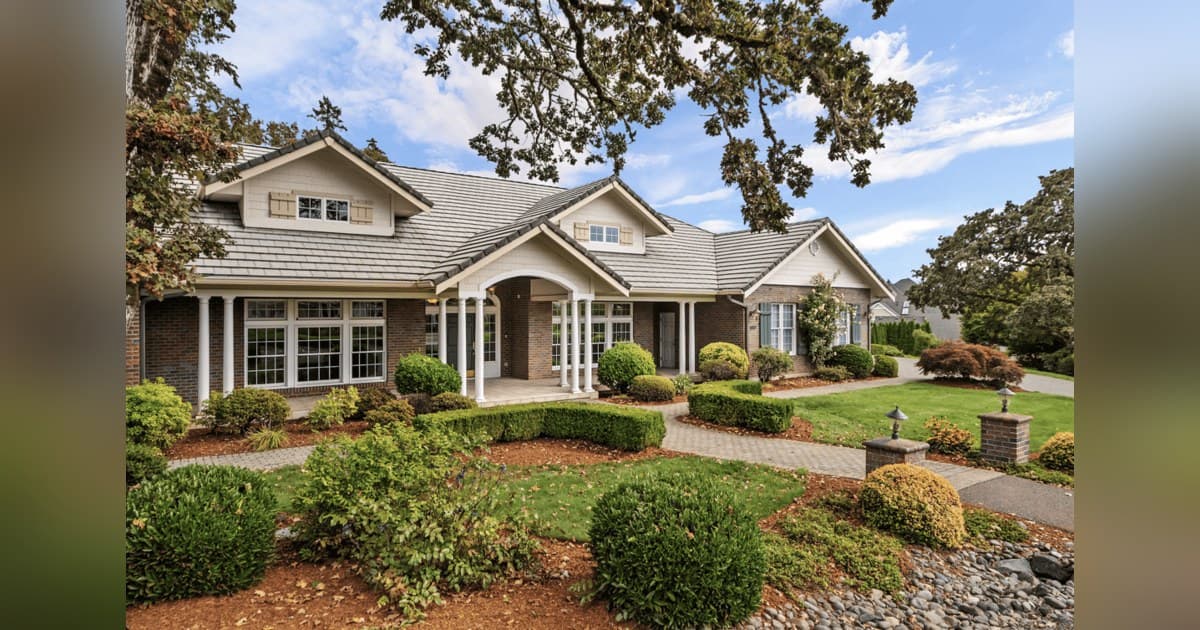
Luxury home buyers in Beaverton, Oregon, are prioritizing quality, current technology, privacy, and space in 2026, according to Carey Hughes, who leads Carey Hughes Homes and has spent 26 years selling homes in Beaverton and across the Portland metro Westside. These preferences are reshaping the local luxury market, where inventory has grown to a balanced level and buyers have more choices than they have had in years, many negotiating firmly.
Hughes says that while luxury is subject to individual taste, some expectations are consistent. Buyers want a high-quality chef’s kitchen with stone countertops and high-end appliances, and they expect technology built into those appliances and throughout the house. The challenge for sellers is how quickly that technology ages. “If a home was built 10 years ago or 20 years ago and had tech in it, it is absolutely obsolete now,” Hughes says. To command top dollar, a home needs to keep up with current materials and styles, and outdated systems are one of the first things a luxury buyer notices.
Privacy and acreage have long been a preference in the Portland area, predating the pandemic rush for space. Most of the region was built around neighborhoods and yards, and urban living has only taken hold over roughly the last 30 years. Oregon’s land use laws now push new construction toward higher density, making larger lots harder to find. “The homes that do offer that privacy and the space definitely come at a premium,” Hughes says. Lots of an acre or more are rare on the Westside, with only a few neighborhoods offering them, including Corinne Heights, a planned development of acre-plus lots on the edge of Beaverton, and Hartung Farms, an older neighborhood in north Beaverton with large lots and multimillion-dollar homes. Many of these pockets sit inside denser neighborhoods, so buyers often don’t know they are there.
Because of density rules and the area’s hilly terrain, most homes around Portland are built on multiple levels, making single-level luxury homes especially hard to find. Hughes says buyers in this price range are often a little older and want a true main-floor primary suite so they can age comfortably in place. They also want room for the way they live, including dedicated offices, libraries, and detached shops with heat and 220-volt power, features that leave room for work, hobbies, or future guest space.
Buyers above $1 million are less sensitive to interest rates than the rest of the market. Hughes says the down payment is less of a concern for these buyers, some are not financing at all, and many have seen strong investment returns in recent years, so monthly payments carry less weight in their decisions. Luxury homes do take longer to sell, simply because there are fewer buyers at that level. The ones that move share a few traits. “What makes a home sell is truly how it’s cared for,” Hughes says. Homes with quality materials, consistent maintenance, and a realistic price attract offers.
Price bands matter, too. In Beaverton’s luxury neighborhoods, homes under $2 million get attention, and there are relatively few listings above about $1.75 million. Above $2 million, Hughes says, the suburbs hit a threshold that is hard to cross, while Portland Heights and Lake Oswego operate under different dynamics. At her current luxury listing, she has seen strong open house turnout from buyers who already follow the neighborhood and are comfortable with the price. For owners of higher-end homes thinking about selling, a good first step is understanding where the property fits within those price bands. A home valuation from Carey Hughes Homes is one way to start that conversation.
