

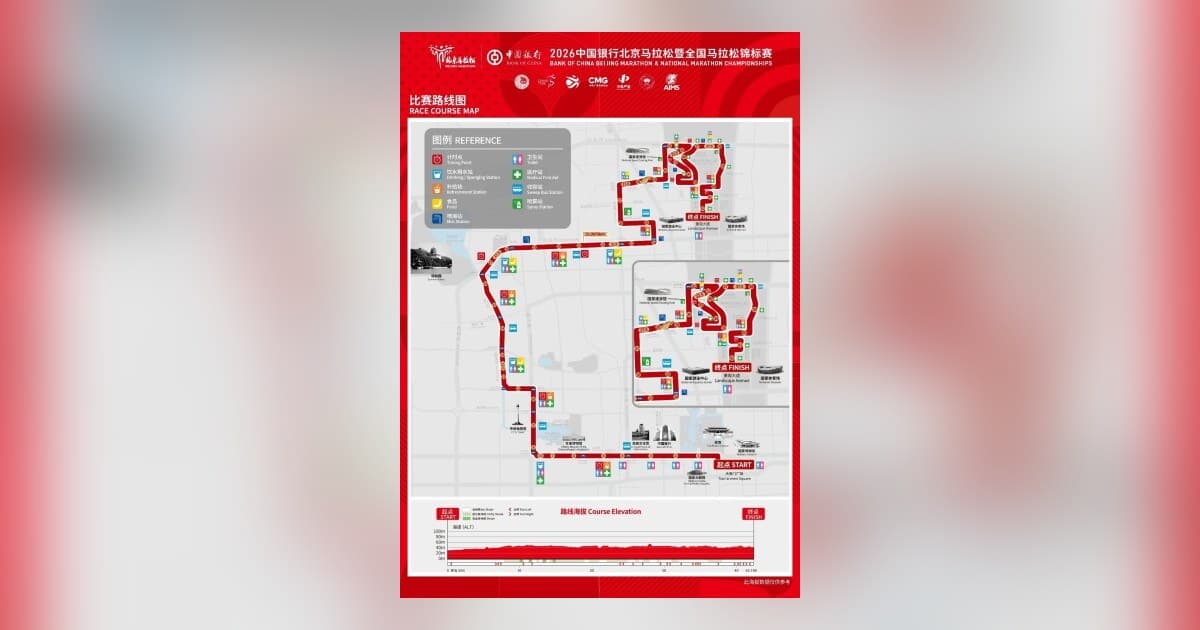
The 2026 Bank of China Beijing Marathon & National Marathon Championships is set to take place on October 18, 2026, with a total field of 32,000 runners. Organizers disclosed the preparation details and competition arrangements at a press conference in Beijing on September 28, as reported via Media OutReach Newswire. The event, founded in 1981, is the oldest city marathon in China and holds a World Athletics Gold Label, underscoring its prestige in the global running calendar.
The race course is a defining feature, starting at Tiananmen Square and following Chang'an Avenue through Fuxingmen and Fuxing Road before heading north into the Xueyuan Road area of Haidian District. Runners then finish at the Olympic Park, sprinting along the landscaped avenue between the Bird's Nest and the Water Cube. This route offers a unique tour of Beijing's landmarks, blending historical and modern elements of the city.
A major change for this year is the integration of the Beijing Marathon with the National Marathon Championships. China's top professional athletes will compete for championship placings on the same course, while mass runners set off alongside them. This format brings professional competition and national fitness together on a single course, providing a high-level platform for elite runners while preserving broad participation for everyday athletes. The organizers aim to balance competitive leadership, public participation, and organizational effectiveness.
To enhance the participant experience and safeguard race order, the organizing committee has released upgraded measures. These include a refined system of medical support, course supplies, and smart guidance, while maintaining mature international event service standards. The event also emphasizes green organization, introducing reusable eco-friendly cups, multi-tap self-service water stations, backpack-style water supply equipment, and recyclable waste collection pools. These environmental initiatives reflect a growing trend in major sporting events to reduce ecological impact.
The marathon is scheduled during Beijing's golden autumn October, when mild temperatures create ideal running conditions. As a "Dual Olympic City," Beijing uses the event to showcase the vitality of China's road running and its urban charm to a global audience. The race not only highlights professional race standards and international organizing concepts but also leverages the city's profound heritage.
For readers, this announcement signals opportunities for runners and fans to engage with a top-tier marathon that combines elite competition with mass participation. The integration with the National Championships could raise the profile of Chinese distance running and inspire more people to take up the sport. The green measures may set a benchmark for other races, promoting sustainability in athletics. Additionally, the event's economic impact on Beijing's tourism and hospitality sectors could be significant, drawing thousands of visitors and showcasing the city's capabilities as a host of major international events.
