

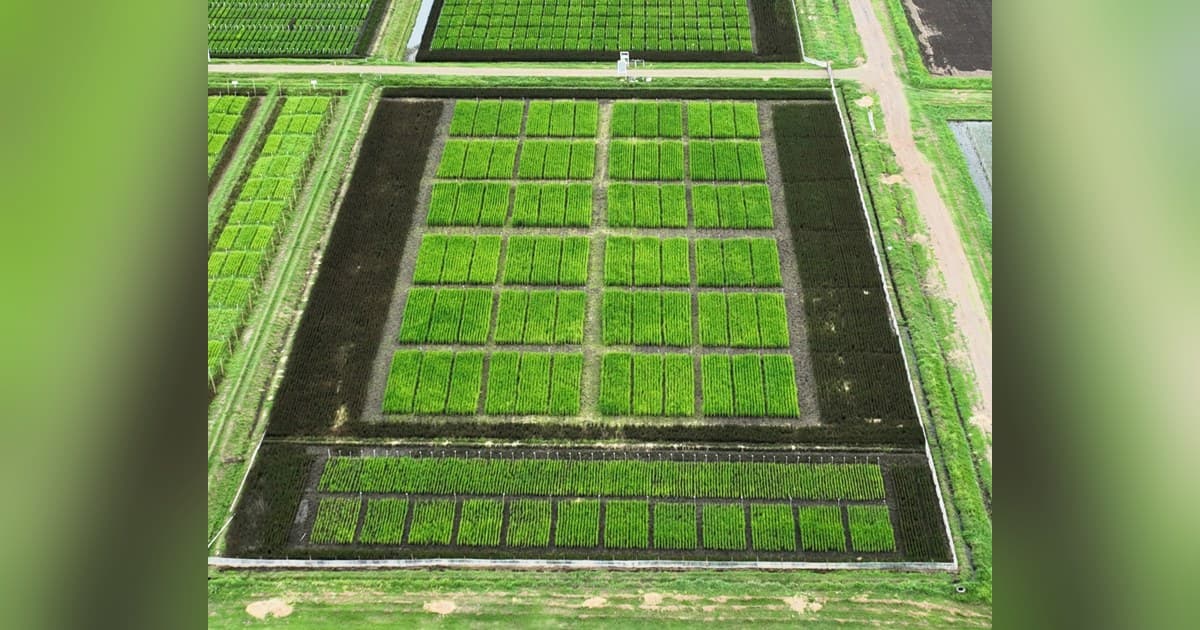
BioLumic and the International Rice Research Institute (IRRI) have launched field trials in the Philippines to test a light-activated seed technology designed to help farmers protect rice yields while cutting water use and methane emissions in direct-seeded systems. The program, supported by the Gates Foundation, advances the technology toward commercial deployment across major rice-growing regions. For full details, click here.
Direct-seeded rice (DSR) is a lower-water, lower-emission alternative to traditional flooded rice production, particularly across South Asia where water scarcity and labor constraints are increasing pressure on farmers. BioLumic’s xTraits™ platform uses light to activate or suppress gene expression in seeds without chemical inputs or genetic modification. By harnessing photomorphogenesis as a natural biological switch, xTraits unlocks trait potential already present within the seed, enabling targeted trait activation without changing on-farm growing practices.
The trials are taking place in the Philippines, a key rice-producing country, and are part of a broader effort to validate the technology under real-world conditions. The involvement of IRRI, a globally recognized rice research institute, lends scientific credibility to the initiative. The Gates Foundation’s support underscores the potential of the technology to address food security and climate challenges.
BioLumic, founded in 2013 and based in the U.S. and New Zealand, is pioneering expression-based, heritable traits that improve crop performance without altering DNA. Its patented xTraits Platform™ uses proprietary Light Recipes to program coordinated genetic expression at the parent seed stage, delivering polygenic, heritable gains in yield, resilience, and nutrition with no genetic modification, no rebreeding, and no regulatory burden. xTraits integrate directly into existing breeding and seed production pipelines and stack with current trait technologies. In partnership with leading global seed companies, BioLumic is transforming trait development into a faster, more scalable, and commercially predictable system. Learn more at www.biolumic.com.
The field trials represent a critical step toward commercial deployment. If successful, the technology could offer rice farmers a way to maintain yields while reducing water use and methane emissions, addressing both environmental and economic pressures. Methane from flooded rice paddies is a significant contributor to global greenhouse gas emissions, and water scarcity is a growing concern in many rice-growing regions. By enabling DSR with protected yields, the technology could help farmers adapt to these challenges without sacrificing productivity.
The program’s progress will be closely watched by the agricultural industry, as it could pave the way for broader adoption of light-activated seed treatments in other crops. The collaboration between BioLumic and IRRI, supported by the Gates Foundation, highlights the growing interest in sustainable agricultural innovations that can be deployed at scale. For more information on BioLumic, visit BioLumic.
