

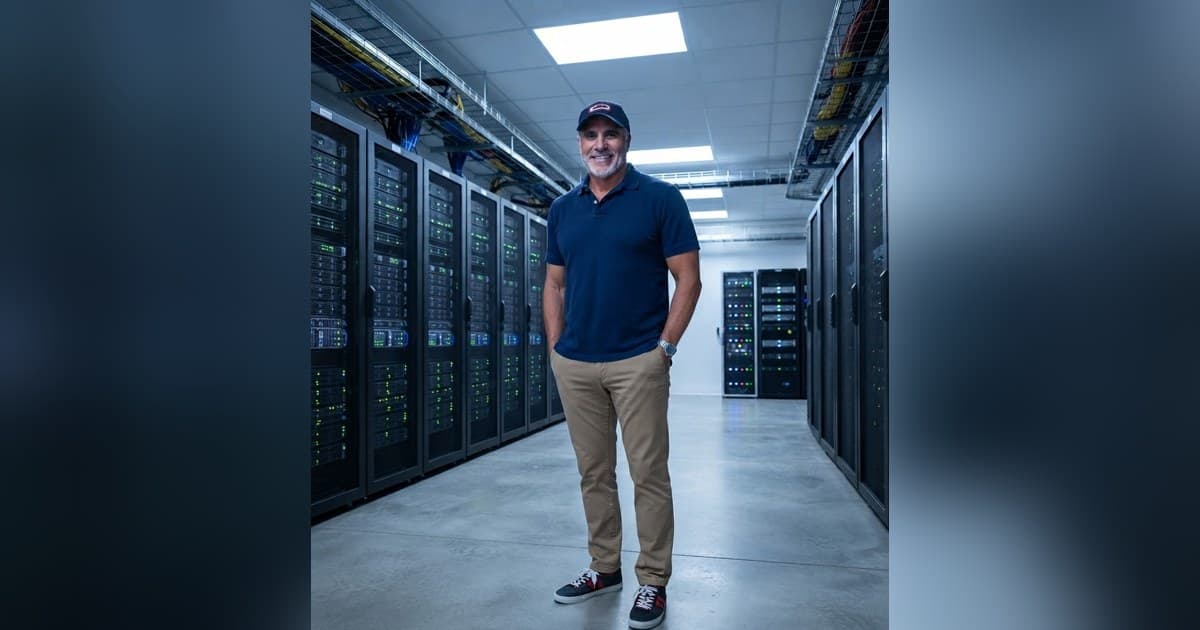
U.S. spending on information processing equipment reached $752 billion in the second quarter, surpassing real private residential fixed investment of $748 billion for the first time, according to federal data reported by Fortune on Sept. 20. The milestone, which reflects a shift in capital allocation toward computing infrastructure, has prompted investor Daniel Kaufman, founder of Kaufman & Company, to call for a new approach to building AI data centers that integrates housing for the workforce.
Residential investment has fallen 18% from its early 2021 peak, while computing spending has risen 51%. As AI infrastructure expands, communities in Utah and El Paso have pushed back against new data center campuses. In Utah, residents are challenging a county’s approval of a $10 billion data center campus, and El Paso adopted new rules for data centers this summer.
“For the first time, this country is putting more money into the machines that run AI than into the homes people live in,” Kaufman said. “I’m not here to fight that capital. We develop data centers ourselves. But every campus needs electricians, operators and their families living within a reasonable drive, and right now almost nobody is budgeting for those homes. That is how you lose a town hall, and it’s how you lose a workforce.”
Kaufman & Company has a stake on both sides of the trade. ServerDomes Global, a Kaufman Ventures portfolio company, announced plans in July for geodesic dome data centers in Utah and El Paso, Texas, including an El Paso site spanning 24,000 acres. The company has said the domes are designed to use about 90% less water than conventional facilities. On the housing side, the platform includes DK Homes, Design Build Affordable and the factory-built Mr Good Container Homes, and works with Oldivai, an aligned, independently led workforce housing partner.
“Communities are right to ask what they get in return for hosting this infrastructure,” Kaufman said. “Our answer is that we don’t want a blighted site with a fence around it. We want to build housing and other uses around the domes, and we want the people who keep those buildings running to be able to live near them. An investor who treats the housing as somebody else’s problem is going to find the power, the permits and the people all harder to get.”
The implications for the data center industry and local communities are significant. As computing spending continues to outpace housing, the demand for skilled workers to operate and maintain AI facilities will only grow. Without nearby affordable housing, companies may struggle to attract and retain talent, leading to operational delays and increased costs. Moreover, community opposition can stall or derail projects, as seen in Utah and El Paso. By incorporating workforce housing into campus plans, developers can mitigate local resistance, ensure a stable labor pool, and create more sustainable developments. Kaufman & Company’s dual approach—developing both data centers and housing—offers a model for aligning infrastructure growth with community needs.
Kaufman & Company is a permanent capital holding company founded and led by Daniel Kaufman, spanning residential development, workforce housing, AI infrastructure and venture capital across 10 operating companies: Convivium Living, DanReDev, DEK Builds, Design Build Affordable, DK Homes, Forge Development Partners, Kaufman Development, Kaufman Real Estate & Consulting, LoneStar Kaufman and Kaufman Ventures. Backed by more than 25 years of real estate experience, the platform has delivered more than $2 billion in project value and financed or developed more than 10,000 housing units. Kaufman & Company is a d/b/a of Kaufman Family Office LLC and Kaufman Real Estate & Consulting LLC.
