

The Federal Aviation Administration's eVTOL Integration Pilot Program (eIPP) has selected eight projects to test advanced air mobility operations, but contrary to public perception, the first commercial applications are likely to be medical and logistics flights rather than passenger air taxis. Lisa Wright, founder and CEO of Landings, attended a recent meeting of the Port Authority of New York and New Jersey, one of the program participants, and observed that the discussions centered on drones, heavy drones, shipping logistics, and emergency services, not urban air taxis. "The reality is, first use cases are medical and logistics, and freight," Wright said. "There's a lot more conversation around drones and heavy drones and shipping logistics and emergency services than I had expected, given the headline."
The eight projects include state and regional participants such as the Florida Department of Transportation and the Port Authority of New York and New Jersey. The manufacturers involved are Archer, Beta, Joby, Electra, Wisk, Ampaire, Elroy Air, and Reliable Robotics. This mix indicates that the program is testing a broader range of operations than passenger service alone, including cargo and automation-focused companies like Elroy Air and Reliable Robotics.
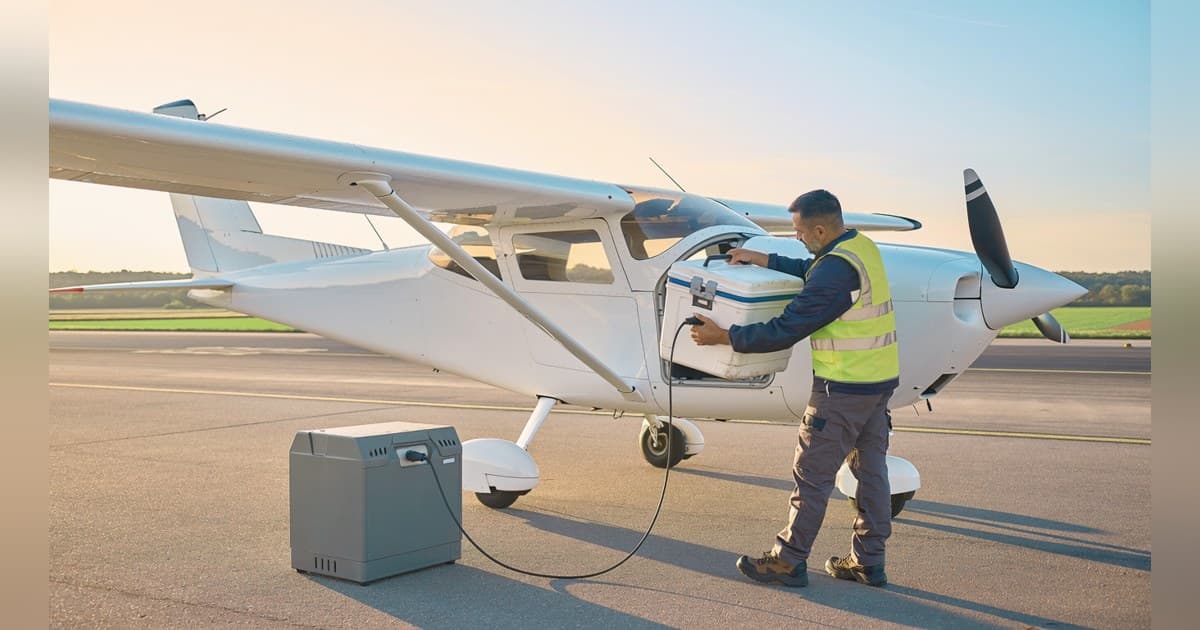
Beta Technologies stands out, appearing in seven of the eight projects. Wright attributes this to the company's breadth across electrification. "Beta has done a great job of being involved on many levels of electrification," she said. "They've installed over 40 chargers at regional airports in many of these states now, so they're ahead on the charging part." She also notes that Beta's conventional fixed-wing electric aircraft has logged more miles than any other electric aircraft in the group. The fixed-wing design allows the use of existing runways at regional airports, while vertical takeoff aircraft depend on vertiports that are still largely being planned. Beta, based in Vermont, also unveiled a heavy drone for government and military customers at the Farnborough International Airshow this summer. Its non-urban origins may have influenced its focus on diverse use cases.
Other manufacturers have different priorities. Joby, for instance, is currently concentrated on urban passenger service. Both approaches serve real markets but are arriving on different timelines.
Already, drone services are launching out of Brooklyn and New Jersey. In North Carolina, Pivotal aircraft are being used for emergency responder services, relying on a lighter aircraft category with a different certification path than passenger eVTOLs. These operations have distinct infrastructure needs, requiring charging where cargo and responders actually move, such as regional airports, rural hubs, and emergency service facilities.
For communities outside major metros, the sequence of deployment matters. Rural regions often lack the passenger density to support frequent air taxi routes but have pressing needs for medical access, freight, and emergency response. Wright advocates for infrastructure designed around use cases rather than aircraft models, allowing sites to serve multiple aircraft types and uses. This approach prevents early cargo and medical flights from locking a site into a single purpose.
While the passenger air taxi remains the most visible symbol of the industry, the program's first results will likely be measured by whether medical supplies, freight, and emergency teams move faster than before. This shift could significantly impact rural communities and the broader logistics sector, potentially improving access to critical services and reducing reliance on road infrastructure.
