

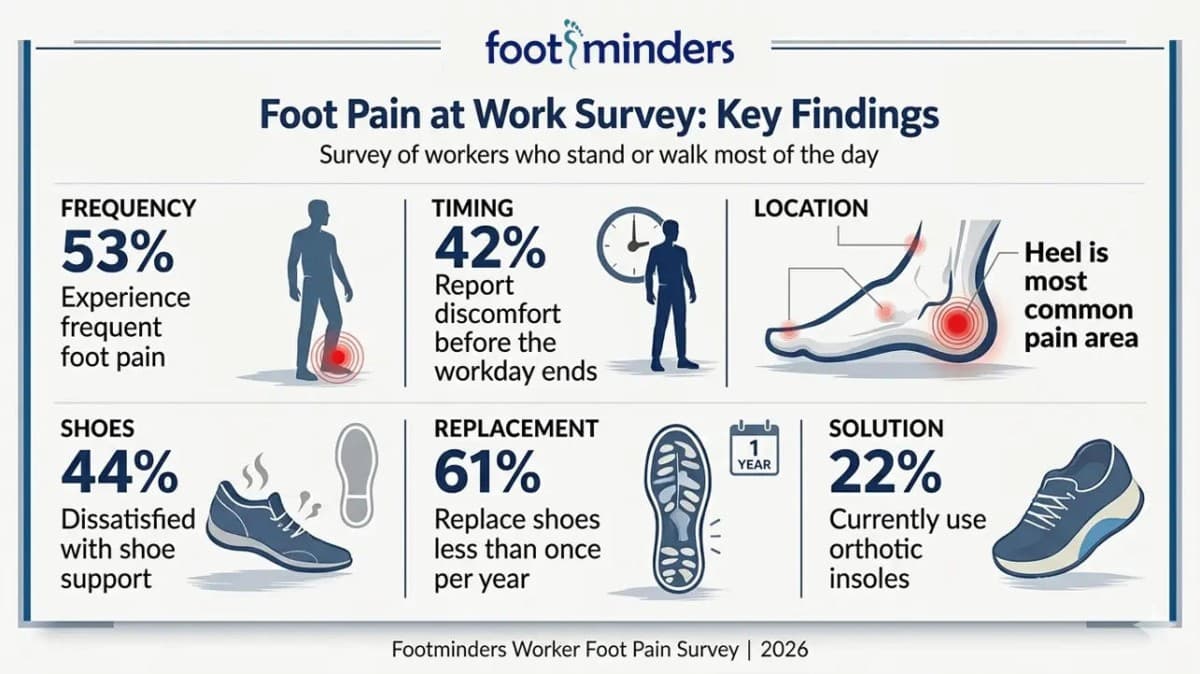
A new survey from Footminders Inc. reveals that 53% of workers who spend long hours standing or walking experience foot pain several days a week, with 42% reporting that discomfort typically begins before the end of their work shift. The findings, detailed in the company's 'Foot Pain at Work Report,' highlight a significant gap between the prevalence of foot pain and the use of orthotic support, as only 22% of those with weekly foot pain use orthotic insoles.
The survey, conducted online between March 1 and March 11, 2026, targeted U.S. workers who are employed and spend at least 4 hours per workday standing or walking. Out of 512 total responses, 246 qualified for the analysis. Workers from a broad range of industries, including healthcare, retail, construction, and food service, were represented.
Key findings indicate that heel pain is the most commonly reported pain location, reflecting the strain placed on the foot during extended periods of standing or walking. Additionally, 44% of respondents expressed dissatisfaction with the support or comfort of their work shoes. The impact of foot pain extends beyond the workday, affecting the quality of life for 32% of those surveyed.
“These results highlight how common foot pain can be for people whose jobs require long hours on their feet,” said Fred Salomon of Footminders Inc. “Many workers assume soreness is unavoidable, but supportive footwear and orthotic insoles can often make a meaningful difference.”
The complete findings, including industry-specific data and ergonomic analysis, are available in the Foot Pain at Work Report published by Footminders Inc. The report aims to provide deeper insight into the long-term impact of standing shifts on worker wellness, following widespread industry interest in the company's initial survey findings.
For workers experiencing foot pain, the survey suggests that orthotic insoles could be an effective solution, yet adoption remains low. The findings underscore a potential opportunity for employers and workers to address foot health proactively, potentially reducing discomfort and improving productivity and well-being.
