

Huawei hosted an international media roundtable in Shenzhen on October 3, 2026, where Richard Yu, Executive Director and Chairman of the Investment Review Board, outlined the company's consumer business strategy and technological achievements. Yu, who joined Huawei in 1993, emphasized a long-term vision centered on delivering a seamless AI life experience across five key scenarios: HIMA-powered Smart Travel, HarmonyOS Office, Smart Home, Fitness & Health, and Entertainment.
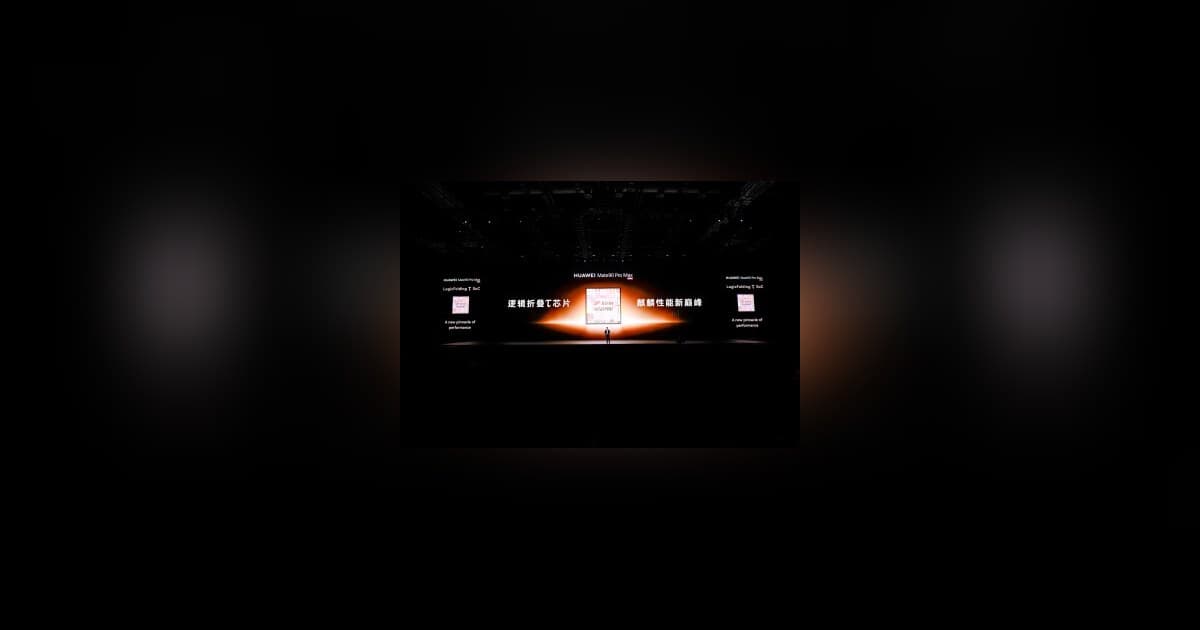
Between 2007 and 2025, Huawei invested more than CNY1.8 trillion in research and development, increasing its annual R&D budget from roughly 10% of revenue to over 20% in recent years. This sustained investment has yielded robust core capabilities and a vast patent portfolio. A key breakthrough is the LogicFolding technology under the Tau Scaling Law, unveiled by He Tingbo in May. This technology vertically stacks logic layers of chips and restructures circuit layout through high-density interconnects, shortening critical paths and reducing latency. It debuted on the Kirin 9050 Pro chip, which powers the new Mate 90 series. The chip enables the Mate 90 to run a 30-billion-parameter on-device AI model and delivers 31% higher overall performance than the previous generation. Yu confirmed that more phones will adopt LogicFolding chips in the future, starting with the Mate XT 2 tri-fold phone.
Huawei's HarmonyOS ecosystem has also reached significant milestones. Since its development began in 2019, HarmonyOS has grown to support over 90 million devices, including smartphones, PCs, and tablets running HarmonyOS 6 and 7. That figure is expected to surpass 100 million by the end of the year. The ecosystem now boasts more than 450,000 apps and services, 11 million registered developers, and over 23,000 app innovation partners. Yu expressed gratitude to partners and revealed that Huawei is considering gradually bringing HarmonyOS to the global market. For a deeper look at Huawei's innovation strategy, see the full Q&A session at https://www.apmultimedianewsroom.com/multimedia-newsroom/continuous-innovation-securing-our-competitive-edge-through-technological-breakthroughs.
Despite facing limited access to advanced semiconductor processes, Huawei has adapted by developing its own operating system, tools, and domestic supply chain. In 2023, the company resumed domestic manufacturing of smartphone chips. With HarmonyOS and homegrown chips, Huawei has reduced its dependence on US technologies. However, production capacity for advanced semiconductors in China remains tight, and rising memory component prices have somewhat constrained smartphone sales. Yu noted that Huawei has a requirement plan covering both AI and smartphone chips, and he hopes China's semiconductor industry will ramp up capacity to meet future demand.
Globally, Huawei's smartphone market share has declined, but the company is taking steps to return to overseas markets. Its wearables business is now number one in both China and globally, and TWS earphones have reached the top spot in many countries. HarmonyOS-based tablets are performing strongly, and CPE mobile routers are well received in remote regions, helping connect the unconnected. As Huawei continues to innovate under pressure, its progress underscores the resilience of China's tech sector and offers a potential alternative to established ecosystems, with implications for global competition and technological self-reliance.
