

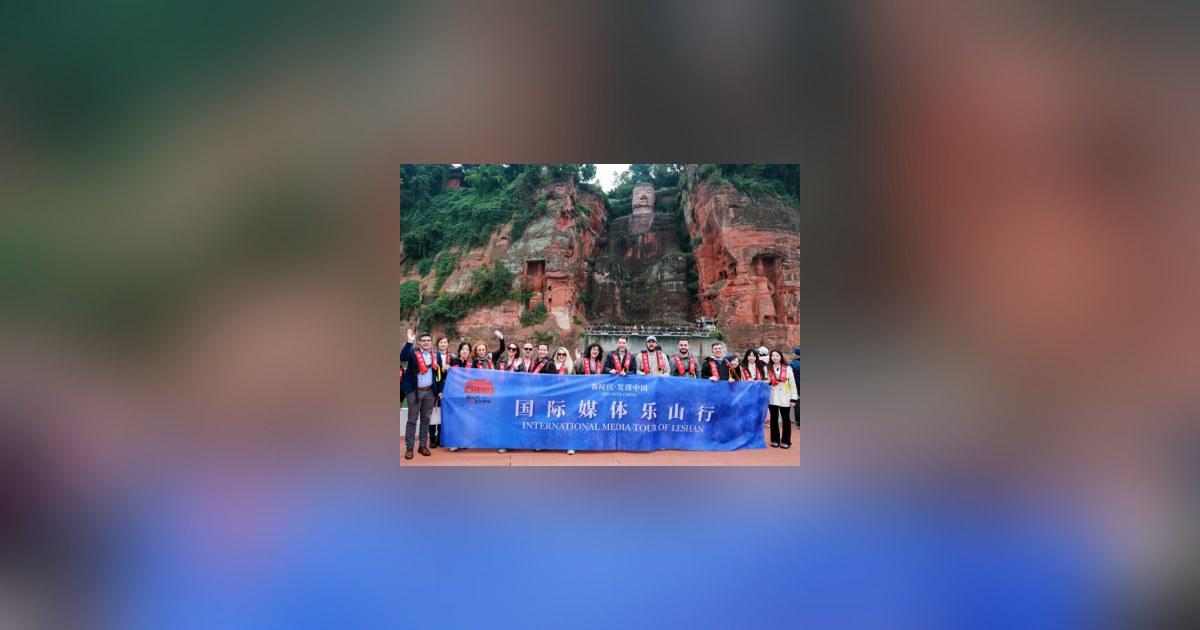
Eleven journalists from international media outlets across nine countries, including Italy, Hungary, Serbia, Bulgaria, and Slovakia, visited Leshan, Sichuan Province, from November 1 to 2, 2026, to observe firsthand how the city is combining technological innovation with cultural preservation. The visit, reported via Media OutReach Newswire, highlighted a conservation approach that integrates historical legacy into urban development and daily life, offering a potential blueprint for heritage sites facing similar environmental threats.
The Leshan Giant Buddha, a 71-meter seated Maitreya carved during the Tang Dynasty at the confluence of the Minjiang, Dadu, and Qingyi rivers, has awed visitors for over 1,300 years. Inscribed on the UNESCO World Heritage List in 1996 as part of the Mount Emei Scenic Area, the statue faces significant conservation challenges due to its red sandstone composition, which is highly vulnerable to water infiltration and biological growth. These factors cause weathering and cracking that have long plagued preservation efforts. Rather than relying solely on conventional repair, Leshan has adopted a science-driven strategy.
At the Heritage Monitoring Center of the Leshan Giant Buddha Grottoes Research Institute, live data streams track the statue's condition in real time. Since 2024, researchers have employed drone-based close-range photogrammetry to construct a high-precision 3D model of the Buddha and have utilized artificial intelligence to identify and map deterioration types and distribution across its surface. This digital conservation approach impressed Hungarian reporter Zsiros Mihaly, who remarked, "Digital conservation opens a new window on grotto research, and I look forward to the science that follows."
Protection efforts extend beyond the monument itself. In Leshan, heritage preservation is interwoven with urban life and public benefit. A ferry service costing just 2 yuan shuttles residents between the scenic area and the city's dining hubs, while a riverside promenade offers a popular recreational space. The "Night Tour of the Three Rivers" project uses modern lighting and projection to illuminate the cliffs and river, enhancing the Buddha's splendor after dark and narrating the story of its ancient creation. Cultural products like the "Giant Buddha Impressions" series bring historical themes into everyday life.
The strategy appears to be yielding results in visitor engagement. From January to October 2026, the Leshan Giant Buddha Scenic Area recorded approximately 376,000 inbound tourist visits, a 39.95% year-on-year increase, placing it among Sichuan Province's top destinations for international visitors. Bulgarian journalist Zornista Metodieva Bliznashka expressed admiration: "I never expected the Giant Buddha to be preserved so well. When I get home, I will definitely tell everyone about this amazing wonder - they really must come and see it with their own eyes!"
For industry observers, Leshan's model demonstrates how digital tools can address the vulnerabilities of aging stone monuments while fostering public engagement and tourism growth. As heritage sites worldwide grapple with similar decay and climate pressures, this Chinese approach—merging AI, 3D modeling, and community-focused urban planning—may offer a scalable framework for balancing preservation with accessibility, ensuring that cultural treasures remain both protected and appreciated for generations to come.
