

A new study released by Realtor.com, powered by Pearl SCORE data, quantifies the significant long-term savings associated with purchasing a newly built home. According to the research, buyers of new construction save an average of $25,335 over the first 10 years of ownership compared to buyers of 20-year-old homes. The savings stem from fewer surprise repairs, enhanced safety and comfort, and lower operating costs over time.
Pearl, an independent standards and ratings organization that defines and measures home performance, announced that its Pearl SCORE data was integral to the study. The full report is available at realtor.com/research/new-construction-total-cost-of-ownership-2026.
The study underscores how home performance shapes the true cost of ownership, helping homebuyers understand what a home will truly cost to own, not just to buy. Realtor.com is introducing an interactive total cost-of-ownership experience on new construction listings, powered by Pearl SCORE data, that provides personalized 10-year savings estimates comparing newly built homes to comparable resale properties. This new tool gives buyers greater visibility into future utility, maintenance, and replacement costs before contacting a builder or making a purchase decision.
“All homeowners want to know what a home will actually cost to live in,” said Robin LeBaron, Pearl’s President of Standards and Policy. “Pearl built the dataset that makes that possible, and we’re glad Realtor.com is the first major portal to put it in front of consumers.”
The analysis found that the financial benefits of new construction vary significantly by geography, climate, and local building standards. New England states led the nation in long-term savings, with Massachusetts ranking highest at nearly $39,000 in estimated savings over 10 years due to stricter building codes and greater energy efficiency demands in colder climates.
The research also identified 16 metropolitan areas where the estimated long-term savings from buying a newly built home fully offset the upfront price premium compared to an existing home. Markets such as San Diego, Salt Lake City, and San Antonio demonstrated that lower operating and maintenance costs can substantially improve the long-term economics of homeownership.
“Our team has built the industry’s richest home performance dataset,” said Tim Stanislaus, Senior Vice President of Business Development at Pearl. “We’re thrilled to have Realtor.com introduce Pearl to US homebuyers. Today’s new-construction tool is one of many ways our data helps buyers understand how home performance matters.”
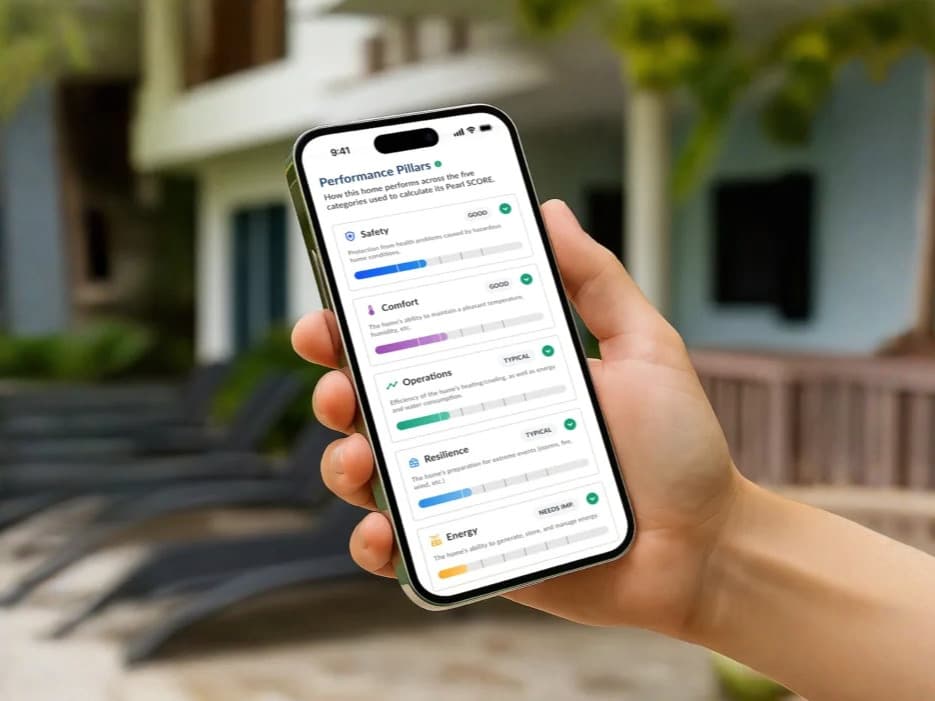
The analysis draws on Pearl SCORE, which rates every U.S. single-family home across five performance pillars: Safety, Comfort, Operations, Resilience, and Energy. Those ratings are available free to consumers at pearlscore.com. Pearl’s ratings draw on utility costs, climate data, maintenance projections, homeowner input, and home performance benchmarks to give homebuyers a more comprehensive view of what a home is actually like to live in.
This study and the new interactive experience on Realtor.com represent a significant step forward in helping consumers make more informed homebuying decisions, focusing on long-term costs rather than just the purchase price. For the industry, it highlights the growing importance of home performance data in real estate transactions.
