

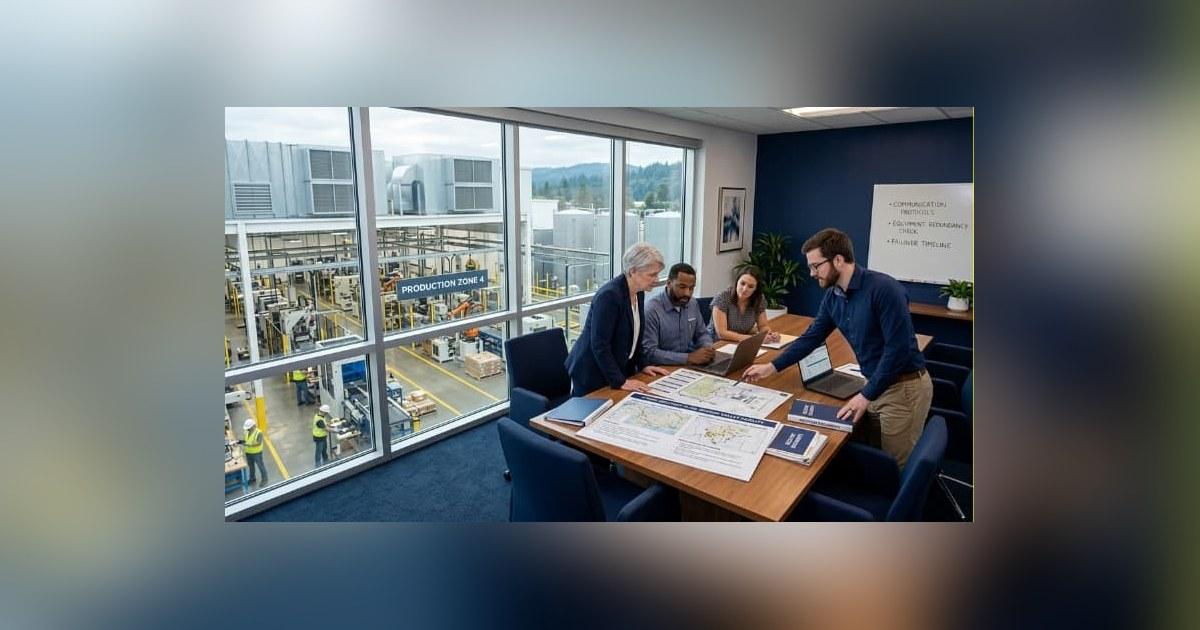
One Up Solutions Northwest, a managed IT services provider based in Tigard, Oregon, has introduced a specialized disaster recovery framework for regional manufacturing facilities. The announcement addresses a critical misconception in industrial business continuity: having secure data backups is fundamentally different from achieving true production readiness. A factory may possess fully intact offsite server logs yet remain entirely offline without synchronized industrial applications, verified machinery configurations, on-site personnel, and a systematic sequence for rebooting heavy machinery.
The framework begins by isolating the essential systems required to manufacture and ship a customer order rather than picking general data retrieval deadlines. This scoping phase maps out corporate software applications used by procurement teams alongside the operational technology directly managing floor machinery. Two critical metrics guide this planning: the recovery time objective, which defines the maximum duration of a tech interruption a business can financially survive, and the recovery point objective, which calculates the maximum volume of recent operational data a company can lose without destroying its order history. These operational goals must reflect unique manufacturing cycles and shipping deadlines instead of applying generic corporate timelines across an entire enterprise.
"We focus on getting machines running again, not just retrieving files, because that is what your revenue actually depends on," said Dave Chapman, President of One Up Solutions Northwest. The company emphasizes that rebooting a software program does not mean a physical manufacturing line is safe to run. A comprehensive restart checklist demands direct inspection and explicit approvals from floor operations managers, mechanical maintenance teams, quality assurance specialists, and specialized equipment brands.
The cost of managing emergency data restoration varies widely based on the complexity of protected machinery, total data volume, target recovery speeds, routine drill schedules, and emergency response availability. Regional planners should evaluate these external metrics against the true overhead of building and maintaining an identical emergency infrastructure using in-house IT staff. Proposals from technology vendors must separate initial environment creation from monthly maintenance and clearly define responsibilities during an active emergency. Business owners should never assume that a standard data backup subscription includes automatic application restoration, machinery coordination, or the localized testing required to confirm shop safety. Industrial leaders looking to budget for these variables can explore options through the baseline cost analysis on How Much Does Managed Disaster Recovery Cost for Small Manufacturers?.
Industrial facilities cannot afford to stop profitable operations just to test their emergency preparedness. Tabletop simulations offer a low-risk alternative, allowing corporate leadership and floor managers to rehearse decision paths and internal communications without altering live factory settings. Isolated digital tests can verify backup records and host system applications safely inside a sandboxed environment separate from active assembly networks. In contrast, verifying physical shop equipment requires booking a dedicated maintenance window that includes formal safety protocols and documented rollback steps. IT experts recommend logging what each drill tested, tracking execution times, and identifying any infrastructure components left out of the simulation.
Varying restoration speeds across different technical layers do not mean an emergency plan has failed. The real danger lies in releasing a physical manufacturing line before the secondary data applications and structural records are fully synchronized. Industrial facilities must maintain a clear, chronological blueprint and assign explicit human owners for technical code restoration, equipment calibration checks, and final restart authorization. Disaster simulation testing must focus heavily on the operational handoffs between these individuals rather than merely validating the digital recovery of isolated servers.
Weather risks shift throughout the year, making biannual reviews essential before major storm seasons arrive. These updates must reflect recent machinery additions, software adjustments, staff transitions, new material suppliers, or modified floor workflows. Every drill finding and minor weather interruption should trigger documented adjustments to the master blueprint. The ultimate goal is an active handbook that describes a facility exactly as it runs today, keeping updated vendor contacts and clear technical procedures instantly available to authorized emergency responders during a massive power outage. While structured preparation significantly reduces local downtime, it cannot override physical infrastructure failures like public grid blackouts, structural facility damage, or blocked regional roads.
One Up Solutions Northwest has been operating out of Tigard, Oregon, since 2003, providing managed IT support, advanced cybersecurity protections, cloud infrastructure, and data continuity solutions for small and mid-sized enterprises across the state. The firm delivers proactive remote monitoring, technical help desk services, and strategic technology consulting built to safeguard regional production and protect local business investments.
