

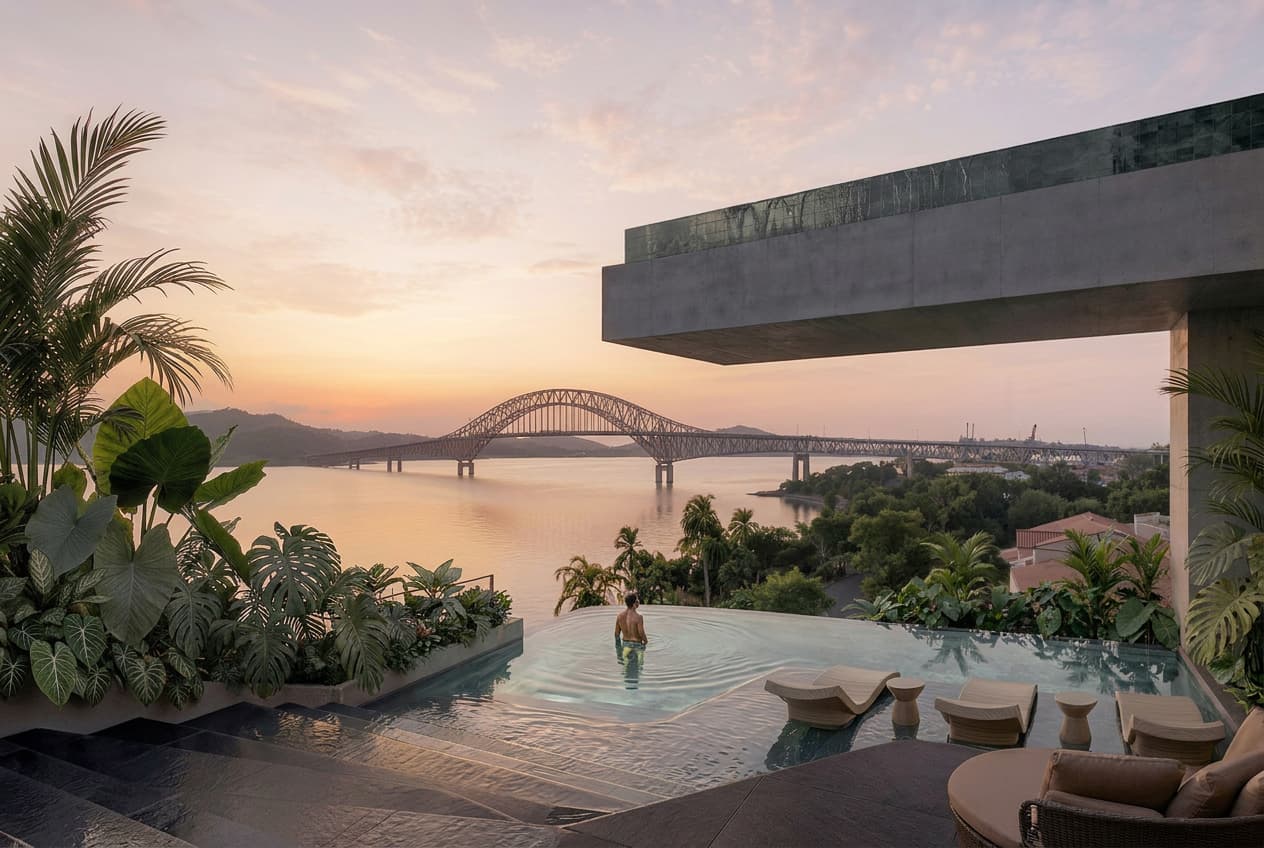
Market indicators suggest Panama’s real estate sector is in early-to-middle development stages where infrastructure investment has begun but market discovery remains incomplete, according to findings from the recent Invest Panama Summit. American investors touring the country this week observed concrete infrastructure projects, strong developer activity, and appreciation signals suggesting the entry window hasn’t yet closed.
Summit participants toured five major development zones and met with developers, attorneys, and local professionals. What emerged was evidence of substantial government and private sector investment in infrastructure projects that historically precede major real estate appreciation cycles. Steve Luther, partner at CHORD Real Estate, identified specific infrastructure signals: “We’re certainly keeping an eye on the highway widening, the subways, the bridges. I’m watching tourism development and multinationals moving into Panama. Those are the indicators that matter most.”
Infrastructure timing and pricing gaps are key factors. Metro extensions, highway widening to coastal areas, and completed infrastructure to new developments represent government commitment visible through actual construction rather than future promises. These projects typically precede 18-36 month periods when appreciation accelerates as accessibility improves. Current pricing remains substantially below comparable markets despite visible infrastructure investment. Oceanfront properties range from $600,000 to $800,000 while interior development properties trade significantly below Miami or Caribbean comparables. The pricing gap persists despite infrastructure projects that will improve connectivity to previously remote areas.
This combination – infrastructure investment underway plus pricing that hasn’t yet reflected future accessibility improvements – represents the market timing scenario where informed investors typically deploy capital. Multiple developers advancing projects simultaneously indicates market fundamentals supporting supply growth rather than speculative excess. Grupo Los Pueblos’ portfolio approach (Santa Maria gated community, Playa Caracol beachfront, Ocean Reef ultra-luxury) demonstrates developer strategy capturing multiple market segments simultaneously.
Institutional investor participation reinforces confidence signals. Westin Hotels’ residential property development represents major capital commitment and reputational stake in market viability. Luther emphasized that Panama hasn’t marketed itself aggressively internationally. “Panama has not done a lot of marketing around the world. It really does surprise people when they get there because people just don’t really know about it. As long as it’s not a topic of conversation around the average American’s dinner table, it’s got a lot of potential.”
This discovery-stage positioning matters because markets transition from undiscovered to obvious relatively quickly once major media attention begins. Summit attendees heard concrete appreciation examples. One investor reported 100% cash-on-cash return on a Playa Caracol property within 12 months of purchase (invested 30% of purchase price, property appreciated 30% before construction completion). While single examples don’t constitute market proof, they demonstrate appreciation velocity in early-stage developments.
Panama’s role as international business hub, banking center, and canal location creates economic anchors distinct from tourism-dependent Caribbean markets. Multinational corporate presence, regional headquarters concentration, and global financial operations generate constant professional housing demand independent of leisure travel fluctuations. This economic diversity reduces market vulnerability to tourism disruptions.
Market timing carries inherent risk. Infrastructure improvements eventually complete, potentially compressing capitalization rates. Increased media coverage attracts larger developer projects and more competitive pricing. Early-stage pricing advantages compress as markets mature. Luther characterized the remaining window: “It’s a matter of time before people start to discover it.”
Infrastructure investment underway, pricing gaps versus comparable markets, developer confidence indicators, and institutional participation suggest Panama real estate remains in early-to-middle development phases. Whether that window remains open for 18 months or 36 months depends on media attention acceleration and developer project launches.
