

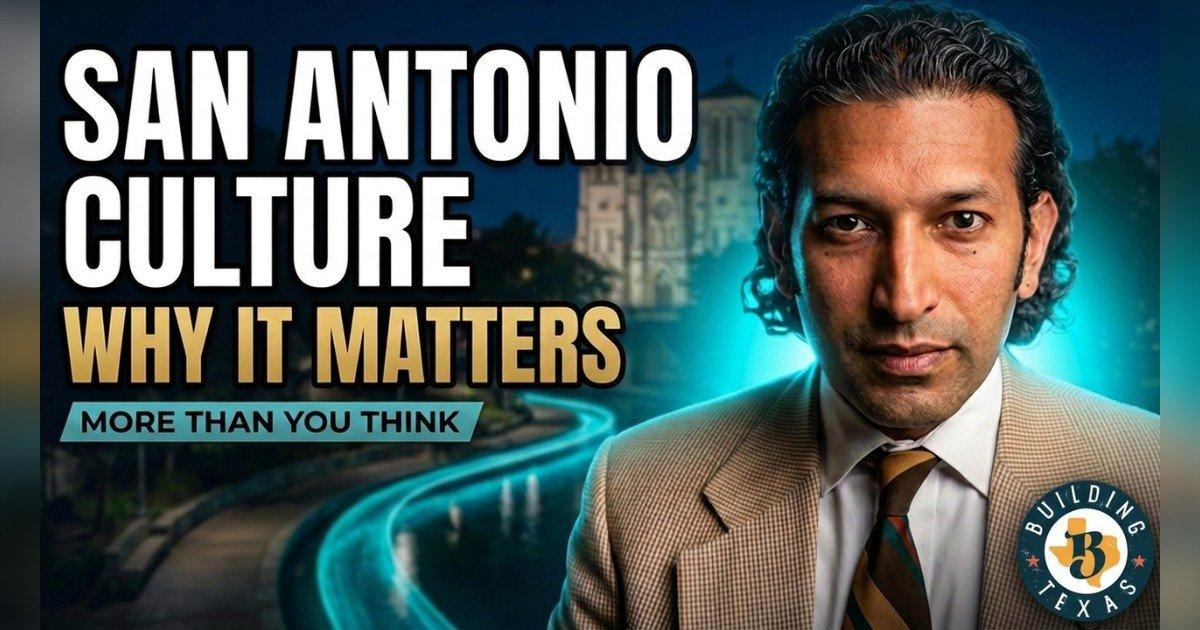
A recent episode of The Building Texas Show makes the case that San Antonio's arts, heritage, and sister-city diplomacy are not merely cultural amenities but essential components of the city's economic strategy. The September 28, 2026 installment, titled San Antonio Culture: Why It Matters More Than You Think, features host Justin McKenzie in conversation with Suhail Arastu of Musical Bridges Around the World. The discussion arrives as San Antonio works through a tight budget cycle, pursues a downtown revival led by Project Marvel, and counts down to major 2028 milestones.
Arastu, who serves as Global Arts Envoy for Sister Cities International and as a mayoral appointee to the San Antonio Arts Commission, argues that culture is the city's most defensible asset. The episode highlights Musical Bridges' 278 free concerts last year, inching toward 300, at venues including Stable Hall, San Fernando Cathedral, and the Carver Community Cultural Center. It also traces the Gurwitz International Piano Competition's sister-city path from the Gwangju Symphony Orchestra and Mexico City Philharmonic to Kaohsiung, Taiwan, in 2028.
Public art takes center stage as well, from the River Walk to San Pedro Creek, the Saga on Main Plaza by Xavier de Richemont, and the UNESCO World Heritage Missions corridor around the Roosevelt Library. Arastu credits former County Judge Nelson Wolff for the San Pedro Creek transformation and notes Leland Stone's 2013 acquisition of the Roosevelt Library, one year before the Missions' UNESCO designation. The Gwangju Pavilion at Denman Estate Park stands as a tangible sister-city gift.
Reflecting on the city's layered heritage, Arastu tells McKenzie: "You talk to so many people here whose families have been here 5, 7-plus generations. They say, we never crossed the river, I mean the border, the border crossed us. So you've got this from our German heritage to the Czech and the Hill Country, from Fredericksburg and Boerne to Spanish." He warns that in current budget conversations, "there's talk of consolidating and removing certain things from certain pots of funding," a move he argues would erode the very identity that draws visitors and employers.
The episode connects these cultural threads to economic development wins like JCB and Toyota, to the return of the Alameda Theater in 2028, and to Title I school and senior outreach that carries Grammy-level, Van Cliburn and Tchaikovsky-rated artists into neighborhoods across Bexar County. Musical Bridges' new season opens October 11 across three downtown venues.
For readers, the implications are clear: San Antonio's cultural sector is a proven economic engine, attracting tourism, fostering international ties, and supporting local businesses. As the city balances budget priorities and plans for 2028, decisions about funding for arts and heritage could shape not only the city's identity but also its economic trajectory. The conversation underscores that culture is not a luxury but a cornerstone of sustainable growth.
