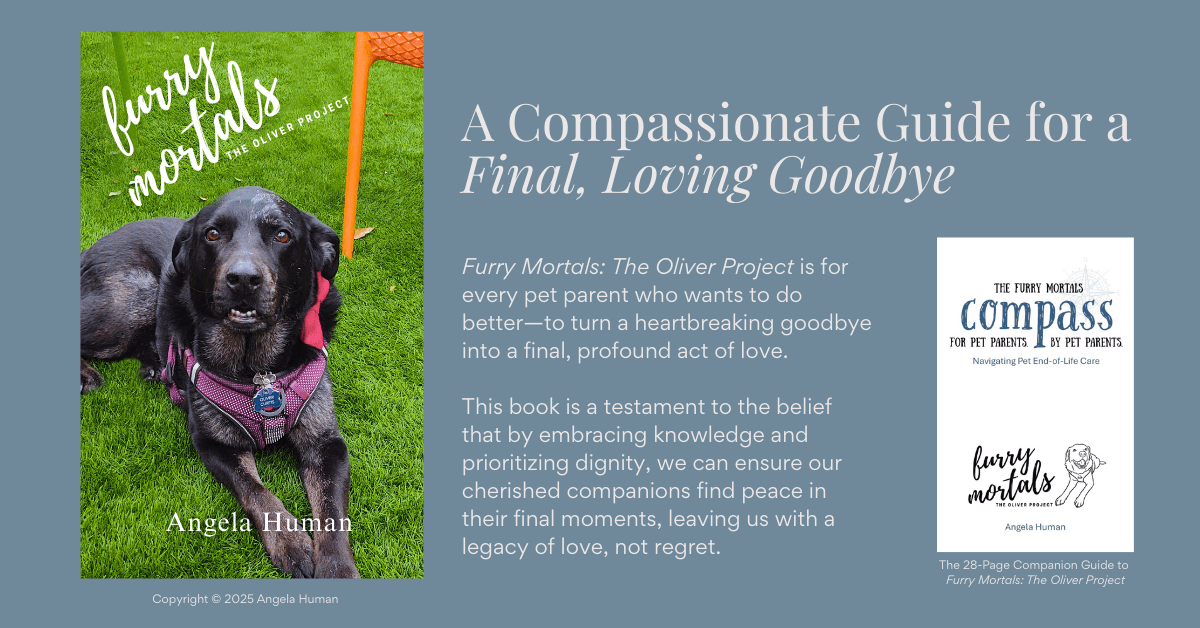
Pet owners facing the difficult journey of end-of-life care for their animal companions now have a new resource that addresses both the emotional weight and practical decisions involved. Angela Human's book, Furry Mortals: The Oliver Project, bridges the gap between clinical guidance and the personal experience of pet loss, offering strategies for managing anticipatory grief, making ethical decisions, and honoring the bond between humans and their pets.
Inspired by her own experience losing her pet Oliver, Human brings a unique perspective as a veteran of the deathcare industry who has spent decades at the intersection of technology and memorialization. She discovered that even with her professional background, the emotional and practical hurdles of pet loss presented overwhelming challenges. This realization prompted her to create a resource that moves beyond traditional manuals by combining expert palliative advice with real stories from other pet parents.
The book addresses what Human describes as the "limbo" period of end-of-life care, when pet owners face difficult medical decisions while experiencing anticipatory grief. Through a decision-making framework, the book provides grounded approaches to the ethics and logistics of end-of-life choices, helping readers navigate this challenging time with greater clarity and confidence.
What sets Furry Mortals: The Oliver Project apart is its emphasis on community and shared experience. The book weaves together poignant narratives from pet parents who have walked this difficult road, creating what Human calls "the community tribe." These real-world anecdotes offer comfort and perspective, ensuring readers never feel alone in their decisions or grief. As Human explains, "Loss is universal, but the path through it is deeply personal."
The book also addresses legacy building, providing practical ways to honor a pet's life and process grief through meaningful action. This comprehensive approach has already resonated with pet owners seeking a grounded, sincere voice in a space that often swings between being too clinical or overly sentimental. For those interested in exploring this resource, the book and its companion guide, The Furry Mortals Compass, are available through various retailers including www.FurryMortals.com and Amazon.
The implications of this publication extend beyond individual pet owners to the broader landscape of pet care and grief support. As millions of households include animal companions, resources that address end-of-life issues with both professional expertise and emotional intelligence fill a significant gap in available support systems. The book's approach of combining practical guidance with community storytelling creates a model that could influence how professionals in veterinary medicine, counseling, and memorial services address pet loss in the future.
For readers facing the difficult reality of a pet's declining health or those who have experienced pet loss, Furry Mortals: The Oliver Project offers more than just advice—it provides validation of their experience and connection to others who understand the unique bond between humans and their animal companions. The book's availability through mainstream channels like Amazon makes this resource accessible to a wide audience of pet owners who might otherwise struggle to find comprehensive support during one of life's most challenging transitions.