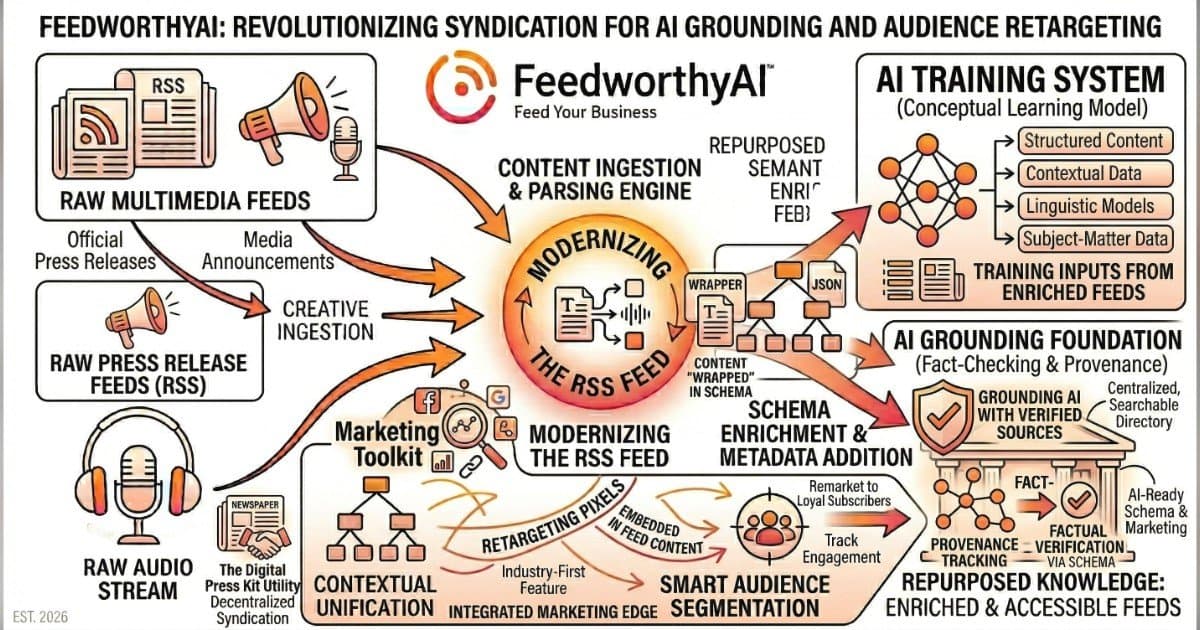
The resurgence of RSS (Really Simple Syndication) technology has gained significant momentum with the launch of FeedworthyAI, a platform designed to bridge traditional content syndication with modern artificial intelligence requirements. As digital content faces challenges from walled gardens and opaque algorithms, this new utility provides publishers with tools to ensure their material is not only visible to human audiences but also properly interpreted and cited by AI systems.
FeedworthyAI addresses a critical need in the current digital landscape by offering a centralized, searchable directory where publishers can submit their RSS feeds. This directory makes niche content more discoverable for AI aggregators, researchers, and power users who seek specialized information. The platform represents a significant evolution from the original RSS technology developed in the late 1990s, which served as the backbone of the "Open Web" before being sidelined by social media platforms in the late 2000s.
Industry experts have welcomed the development, recognizing its potential to solve distribution challenges in an increasingly crowded digital marketplace. Justin McKenzie, host of the Building Texas Show podcast, noted that the platform "bridges the gap between traditional syndication and modern discovery, making it easier for our show to be found, indexed, and valued by the next generation of search and AI tools." This sentiment reflects growing publisher frustration with algorithmic feeds that prioritize engagement metrics over direct connections with audiences.
The platform's technical innovations focus on two primary areas: AI schema application and integrated retargeting capabilities. For AI systems to effectively utilize content for training or real-time retrieval, they require structured metadata that clarifies what the content represents and why it constitutes a reliable source. FeedworthyAI allows publishers to "wrap" their feeds in this essential schema, providing AI models with the contextual understanding necessary for accurate interpretation.
Perhaps more groundbreaking is the platform's integration of retargeting pixels directly within feed content. This industry-first capability enables publishers to track engagement and remarket to their most loyal RSS subscribers across multiple platforms. The system supports pixels from seven major advertising and analytics services, including industry leaders like Google Ads and Meta platforms. This compatibility ensures publishers can leverage their existing marketing technology while transforming passive feed consumption into measurable, cross-channel lead generation.
The implications for content creators are substantial, particularly for independent journalists, niche bloggers, and small publishers who often lack the technical resources of larger media organizations. By offering these advanced tools for free, FeedworthyAI levels the playing field in AI discovery and audience retention. The platform's commitment to an open, accessible internet aligns with broader industry trends toward decentralization and structured data, positioning RSS technology not as a relic but as a forward-looking solution for content distribution.
As users increasingly seek alternatives to algorithmic feeds and publishers demand greater control over their content distribution, FeedworthyAI's launch represents a significant development in how digital content will be discovered, understood, and monetized in the coming years. The platform's dual focus on AI compatibility and marketing functionality addresses both the technical requirements of machine learning systems and the practical business needs of content creators, potentially reshaping how publishers approach audience development in an AI-driven digital ecosystem.