

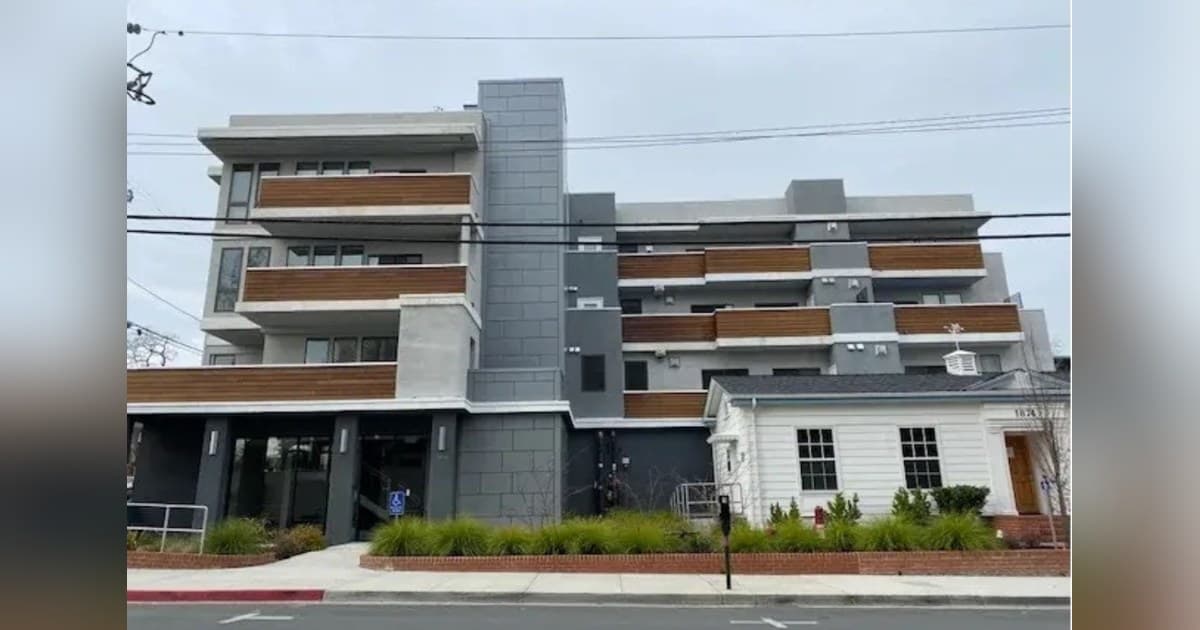
When developers convert existing office or retail buildings into residential spaces, they frequently encounter a hidden challenge: parking requirements that exceed the original building's capacity. Municipal codes often demand more parking for residential use than for commercial uses, leaving developers with a shortfall that can jeopardize project feasibility. This issue recently played out in downtown Walnut Creek, California, in the Golden Triangle district, where a multifamily conversion required more parking than the existing garage could provide, and no adjacent land was available for expansion.
Rather than demolishing the garage and rebuilding, the developer collaborated with KLAUS Multiparking America to add capacity within the existing structure. The solution involved installing MultiBase 2072i automated systems, with one parking level set into a pit and a second stacked above it. This design added a full tier of spaces without the need for costly excavation of a new underground level.
According to Christopher Tiessen, President and CEO of KLAUS Multiparking America, developers who evaluate parking strategies early can uncover opportunities to maximize space and improve project economics. "Office and retail uses tend to carry lighter parking requirements than residential does in most jurisdictions," Tiessen explains. "So a use change can hand a developer a shortfall they weren't budgeting for, on a site that has nowhere left to grow."
The Walnut Creek project highlights a growing pattern in built-out downtowns, where adaptive reuse is becoming more common. As office and retail buildings convert to residential use, developers must navigate parking requirements that can differ significantly from the original use. Tiessen notes that tearing out a structure and rebuilding underground is the most expensive and disruptive way to close a parking gap. "Every level you can recover inside what's already there is a level you don't have to excavate, finance, or explain to a lender," he says.
This case underscores the importance of early parking analysis during property acquisition. By running parking numbers before committing to a project, developers can make more informed investment decisions and avoid unexpected costs. As adaptive reuse continues to transform urban landscapes, solutions like automated parking systems offer a way to bridge the gap between old and new requirements, preserving the economic viability of conversions.
