

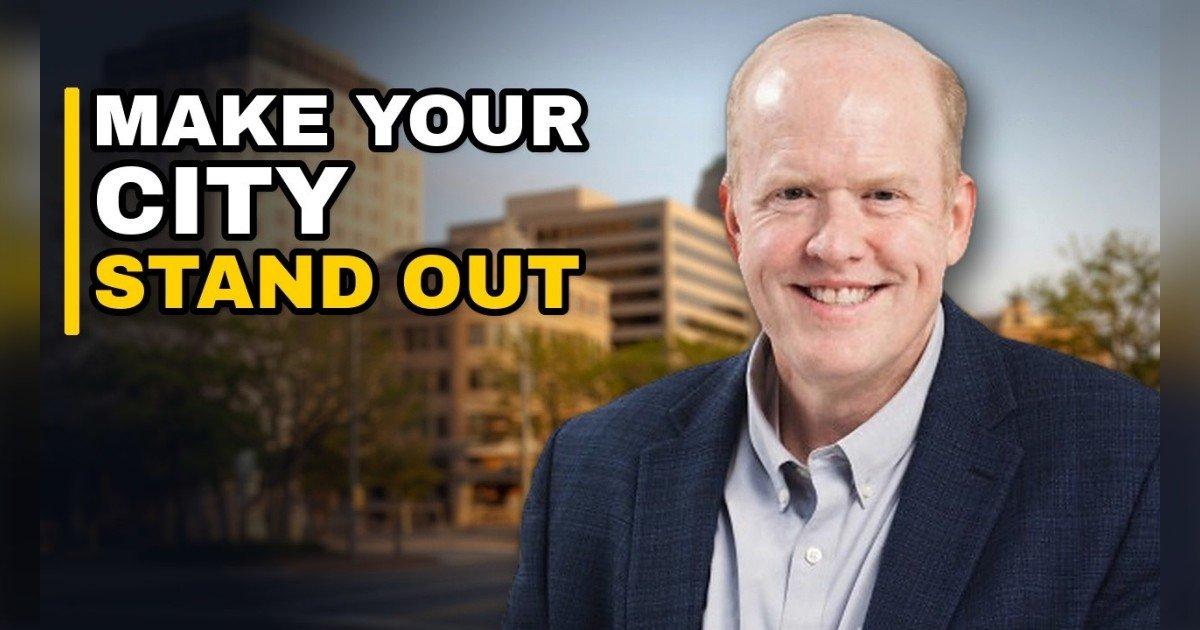
In an episode of The Building Texas Show, host Justin McKenzie speaks with Brandon Fears, Founder and Managing Partner of Gracchus Partners and Chief Growth Officer of idhubs, about how cities and companies can avoid blending into a sea of sameness. The episode, titled Why Every City Sounds the Same - And How to Stand Out, is the Season 4 premiere and Episode 200 of the show. Fears draws on examples from civic technology and marketing to argue that distinctiveness is both achievable and essential.
Fears describes vTaiwan, a civic process used during Taiwan's debate over Uber, where participants could post comments and others could only vote thumbs up or thumbs down, rather than engage in heated reply threads. He tells McKenzie that this structure takes the heat out of public input. "City manager meetings usually become who's yelling the loudest," Fears says. Drawing on that model and his work with idhubs, he suggests that city councils could use software to let residents post comments, vote them up or down, and see which concerns are trending, including how to improve the local economic environment for businesses. Such a tool could make public meetings more productive and give officials a clearer picture of community priorities.
The conversation then turns to why so many city and company pitches blur together. Fears points to Theodore Levitt's 1960 Harvard Business Review essay "Marketing Myopia" and to his own concept of a "compelling market edge." He defines that edge as "what's going to make you unique in the marketplace that no other competitor can talk about," together with "what is going to compel a person to buy." "Every city almost sounds the same," Fears says. "Well, why do you want to move here? Well, we have great schools, we have good public works, we have great parks, it's family-centric. Everybody sounds the same, but they're not." When asked about San Marcos, he and McKenzie identify Texas State University as a unique asset. Fears also cites Prairie View A&M University as an example of a place with a distinct through line, one he associates with perseverance, and says leaders need to lean into such differentiators.
The same problem appears in sales conversations. Fears recounts due diligence work where he asked four salespeople at one company what business they were in and received four different answers. "I'll tell people, your company is four different companies," he says. He also shares a recent conversation in which an operator treated his toughest competitor as proprietary information, then realized "his best competitor was the customer unwilling to change." For small and midsize businesses, Fears says it has never been a better time, or a harder time, with more tools to compete but also inflation, regulation, and larger rivals. The number one problem he sees is owners putting too much money into promotion that is not working, or not promoting at all. His advice is to record on YouTube, slice the same material for Facebook, Instagram, and TikTok, consider a cost-effective editor, and not neglect good audio.
Fears invites listeners to visit Gracchus Partners, which he spells out on the episode, and says a link there lets people book time with him. The full episode is available on The Building Texas Show episode page and on YouTube. For business owners and city leaders alike, the discussion underscores the importance of cutting through the noise with a clear, compelling message.
