

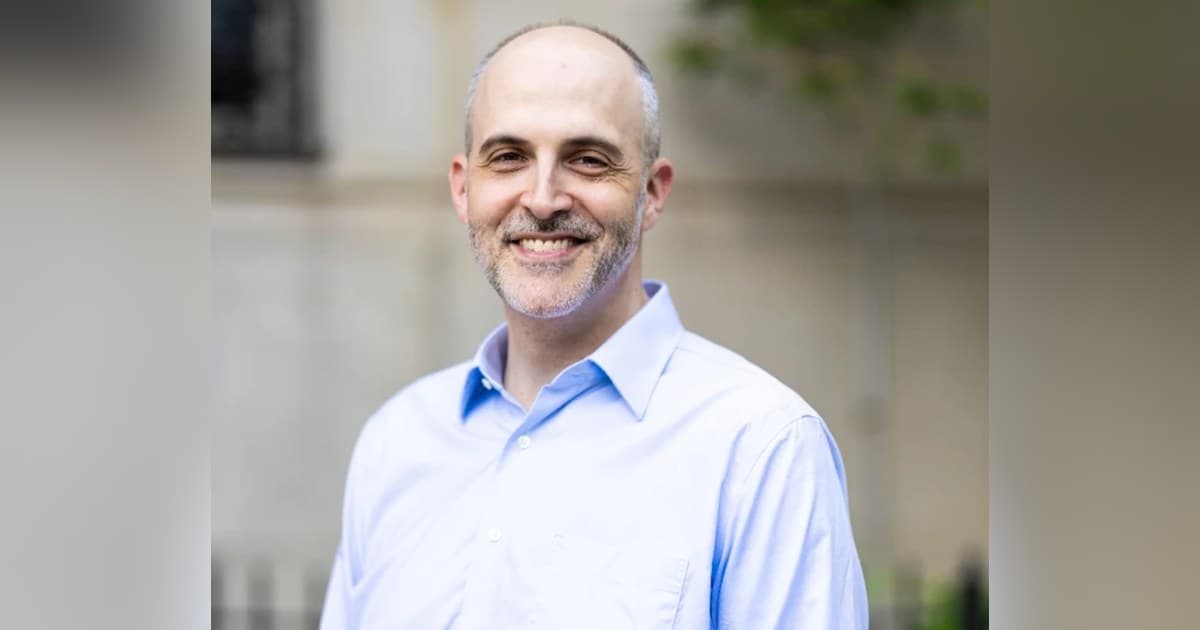
Couples navigating relationship conflict should think twice before turning to AI chatbots for guidance, according to David Tzall, PsyD, a licensed clinical psychologist based in Brooklyn. His warning follows new national data from the American Psychological Association (APA) revealing that a growing number of Americans are using AI for emotional support, advice, and even companionship.
The APA's 2026 Chatbots and Mental Health Survey, which polled more than 1,200 licensed U.S. psychologists, found that 77% have spoken with patients who have used AI for support, engagement, or other reasons. Nearly two in five psychologists (39%) reported patients using AI to self-diagnose, while 35% said patients were turning to AI as an additional mental health professional. The survey also found that 22% of psychologists reported patients using AI for friendship, and 13% reported patients engaging in intimate relationships with chatbots.
Clinical concerns were widespread. Almost every psychologist surveyed (97%) felt that chatbots may inadvertently reinforce negative behaviors or delusional beliefs, and 94% said current chatbots cannot treat conditions with an appropriate amount of nuance. More than a third (36%) said they had noticed patients developing a level of dependency on a chatbot.
Dr. Tzall, who helps couples work through relationship conflict in his practice, explained why AI advice often falls short. "When someone brings a conflict to a chatbot, they bring one side of it," he said. "The response tends to reinforce what that person already believes rather than challenge it. That can feel supportive in the moment, but it limits the kind of problem-solving that relationships actually need."
He has previously written about the risks of over-reliance on AI for emotional support, noting that it may reinforce existing beliefs rather than challenge them, increasing bias and limiting real growth. In couples therapy, particularly with high-conflict relationships, he sees that dynamic play out between partners.
"Progress in a relationship usually comes from hearing what your partner experienced, especially when it's different from your own account," Dr. Tzall said. "A tool that only hears one person's version can't offer that. The conversation that matters is still the one between the two people involved."
Alongside the survey, the APA released a guide on using AI for mental health information safely. The findings point to a growing gap between how people are using these tools and what clinicians believe they can responsibly provide.
Dr. Tzall is a licensed clinical psychologist based in Brooklyn and licensed in New York and New Jersey. He provides individual therapy, couples therapy, parent coaching, and parent coordination through in-person and virtual sessions. He earned his Doctor of Psychology in Clinical Psychology from Nova Southeastern University, and his clinical experience includes work in civil and forensic hospital settings. His practice serves adults, couples, and parents, with clinical focus areas including trauma, addiction, mood disorders, and attachment and relationship concerns. He regularly provides expert commentary on psychological topics for consumer health publications.
For couples, the implications are clear: while AI can offer momentary validation, it cannot replace the nuanced, two-way dialogue that fosters real understanding. As AI becomes more integrated into daily life, Dr. Tzall's guidance serves as a reminder that human connection—and the hard work of listening to a partner's perspective—remains irreplaceable. More information about his practice is available at David Tzall, Psy.D. and additional media resources can be found at https://www.davidtzall.com/media-room.
