

On June 1, the Google Cross-border E-commerce Acceleration Center announced its upcoming settlement in Shangcheng District, Hangzhou City, east China's Zhejiang Province. This move positions Shangcheng as a leader in building a world-class digital hub, providing a powerful engine for Hangzhou-based businesses to expand into global markets, according to the information office of Shangcheng District government.
Shangcheng District is a unique blend of time-honored cultural heritage and modern innovation. Home to the ruins of the Southern Song imperial city, it has been the core of Hangzhou since the Sui and Tang dynasties, carrying forward Song-style culture for over 800 years. The local government has advanced the initiative to inherit and promote Song-style culture by building an open-air museum and launching cultural tourism routes themed on Song aesthetics, balancing historic district preservation with urban renewal.
Scientific and technological innovation is the core driving force for Shangcheng's high-quality development. In 2025, the district launched the construction of a Central Innovation District (CID) covering 122 square kilometers, transforming from a traditional commercial center into an innovation ecosystem powered mainly by artificial intelligence. Shangcheng has set up a ten-billion-yuan industrial fund for AI and embodied intelligence, providing financial support from R&D to commercialization. The district is home to over 50,000 college graduates under 35, with a total talent pool of 420,000, and its index for commercialization of scientific and technological achievements ranks among the top in Zhejiang Province.
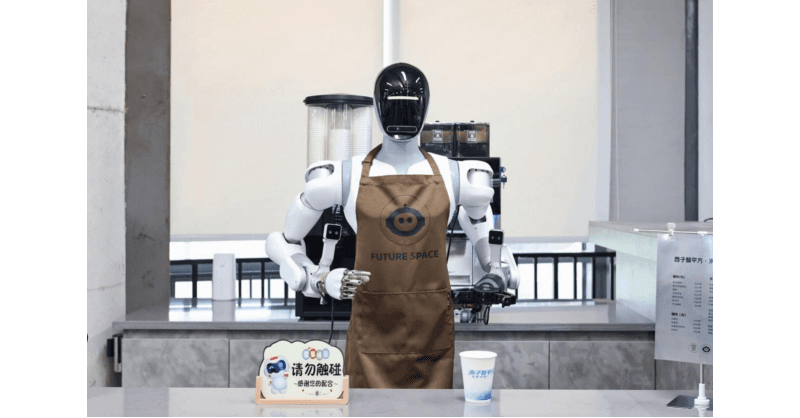
Innovation platforms have flourished, such as Xizi Smart Industrial Park, renovated from old industrial workshops. It now gathers over 30 humanoid robot enterprises, and the Zhejiang Humanoid Robot Training Base was inaugurated there in early 2026. Humanoid robots are being deployed in factories and daily scenarios, with breakthroughs in motion control and environmental perception.
The integration of heritage and technology has also boosted international consumption. Shangcheng is developing an international fashion and consumption hub, empowering consumption scenarios with digital technologies. Hubin Pedestrian Street, adjacent to West Lake, attracts 40 million visits annually and houses over 1,200 renowned brands, using digital applications to create distinctive experiences. Sijiqing Fashion Street, one of China's most influential garment distribution hubs, is transforming into an international tourist and consumption destination, with digital design and flexible manufacturing reshaping traditional supply chains.
"Rooted in history and culture, driven by scientific and technological innovation, and connected via international consumption, Shangcheng demonstrates to the world how an eastern urban district strikes a balance between preservation and innovation, enabling millennia-old heritage to write a new chapter in the contemporary era," said an official of the district government.
