

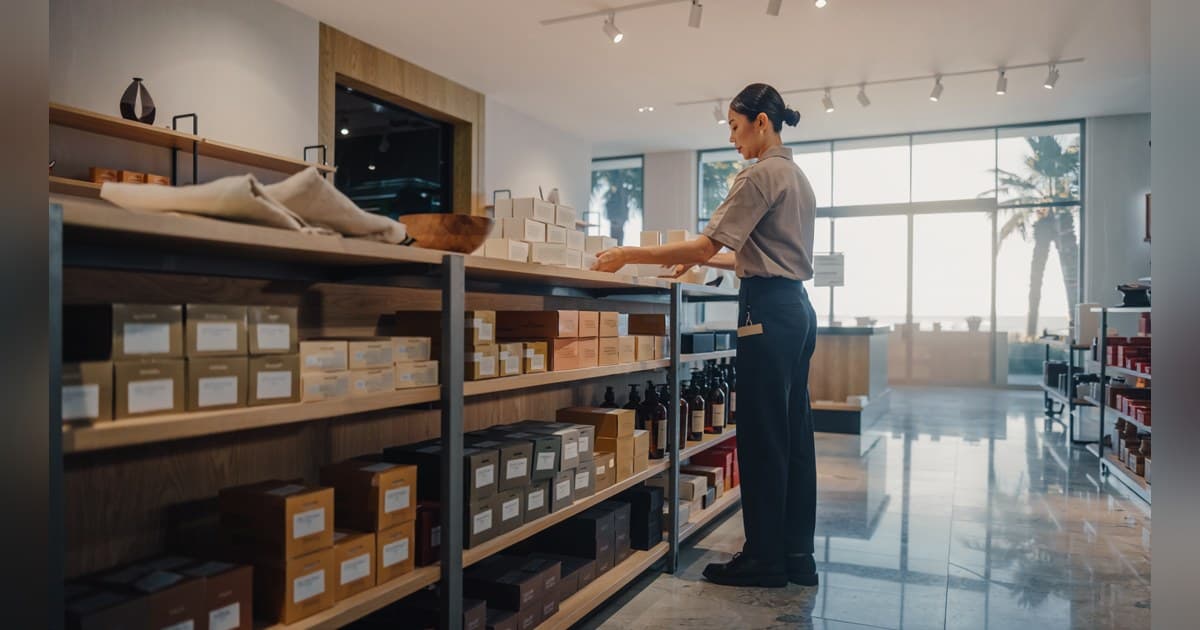
Retailers considering a Hawaii location should prepare for occupancy costs that run higher than mainland equivalents, according to Erin W.J. Mitsuyoshi, CCIM, of The Bratton Team at Colliers International Hawaii. The difference stems from a combination of factors that compound to push the occupancy cost ratio above the typical mainland range. While standard retailers in Hawaii generally run occupancy costs of seven to twelve percent of sales, the comparable mainland band sits lower at six to ten percent. This gap means that a mainland rent-to-sales benchmark applied directly to a Hawaii location will understate the true cost of holding the position.
The variable mainland operators least expect to matter is logistics. In Hawaii, every unit of inventory arrives by sea or air, carrying both a freight cost and a lead time that must be planned around. “It’s not a standard worry that they deal with on the mainland,” Mitsuyoshi says. Freight is not rent, but it consumes the same margin that rent does, directly shaping what a tenant can afford to pay for space. Recent trade policy has sharpened the point, with shifting tariff schedules moving landed costs substantially on goods sourced through Asia. The variability itself has been the harder part, as operators can plan around a known cost far more easily than around a fluctuating one.
Several other costs run materially above mainland equivalents. Utilities are the clearest example, running at roughly double to triple the national average. Insurance has risen sharply. Hawaii also requires employers to provide healthcare coverage, a statutory obligation here rather than a discretionary benefit, and mainland operators frequently model it as the latter. Rents sit above comparable mainland locations as well. None of these is hidden, and each is knowable before a lease is signed. What catches operators out is modeling two or three of them correctly and omitting the rest.
Hawaii’s labor pool has been tight since the pandemic, and the practical consequence is that wage floors are not the binding constraint. The state minimum wage rose to sixteen dollars an hour on January 1, a two-dollar increase, with a further rise to eighteen dollars scheduled for 2028. Hawaii applies no tip credit, so tipped staff receive the full rate before tips. For restaurant operators, Mitsuyoshi’s assessment is that this changes less than the headline suggests, because competitive employers already pay above minimum. In a market where experienced staff is scarce, compensation has been set by competition rather than by statute, and well-run operations have used bonus and tip pools to retain the people who perform. The implication for a mainland operator is that labor should be budgeted at market rather than at minimum.
The brands that have built successful flagships in Hawaii did not find a shortcut. They modeled the market accurately before they signed. Hermès, Harry Winston, Tiffany and Louis Vuitton all operate successfully in Hawaii, having built models that accounted for the real cost structure and judged the position worth it, because a flagship address here carries weight on a global scale. The upside sits alongside the costs. Hawaii delivers strong retail sales, genuine customer loyalty, and a visitor base layered on top of resident demand. An operator with the right product and the right location can perform very well here, as a long list of retailers and restaurants demonstrates.
For landlords and operators alike, the key translation is that the occupancy cost ratio has to be adjusted for the cost structure underneath it, and assets across current Hawaii commercial inventory price accordingly. Mitsuyoshi’s summary is that the market rewards preparation. Go in with eyes wide open, plan for the time and the cost, and the numbers work. The operators who struggle are generally the ones who modeled Hawaii as a mainland market with better weather.
