

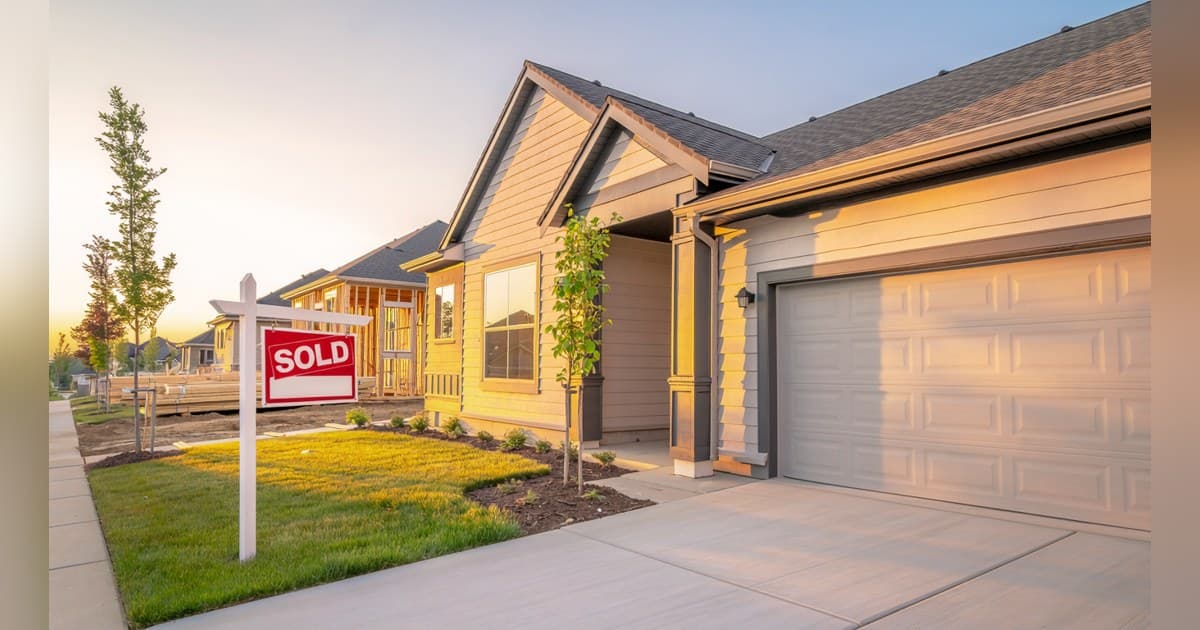
Builder confidence fell to 32 in September 2026, its lowest level in a year, according to the NAHB/Wells Fargo Housing Market Index, and roughly two-thirds of builders reported using sales incentives that month. In that environment, spending marketing dollars with no guaranteed return is a harder sell than ever, and one company is pitching an alternative: pay nothing unless a sale closes.
“There is no guarantee on how many leads you get, and no guarantee they convert,” says Bill Gaul, CEO of Builders Update and chair of the RESO Data Dictionary New Construction Subcommittee, describing the risk builders take on with upfront marketing spend. Builders Update’s pay-upon-performance program inverts that arrangement. Builders pay nothing upfront to list and promote inventory, and a fee is due only when a home closes, alongside the referral fee owed to the agent who brought the buyer.
The closing fee is tiered by price: $1,000 on homes up to $500,000, $1,500 between $500,000 and $1 million, and $2,000 to $2,500 above that, which Gaul argues is a small fraction of the sale on higher-priced homes. There is one condition. Builders have to contribute their full inventory rather than list selectively. “You can’t just cherry-pick,” Gaul says, explaining that the model works because the platform markets the full range, not only the hardest-to-move homes.
Gaul frames the approach as sharing risk rather than charging for exposure. Because the platform earns only on a closing, its incentive is tied to selling homes rather than collecting subscriptions. The program also includes a cooling-off provision: if a builder leaves, any leads the platform has already delivered remain payable for a defined period, protecting the work done on both sides.
The pitch lands differently in a slow market than a hot one. When homes sold quickly, upfront marketing felt like a reasonable bet; as confidence softens and incentives climb, builders are more cautious with every dollar. A model that ties cost to outcomes, Gaul argues, is built for exactly this moment.
For builders, the implication is a lower-risk way to keep inventory visible while cash flow tightens. For the broader housing market, it signals a shift toward performance-based marketing as traditional incentives strain budgets. If the model gains traction, it could pressure other marketing providers to align fees with closings, potentially changing how new-home inventory is promoted during downturns.
