

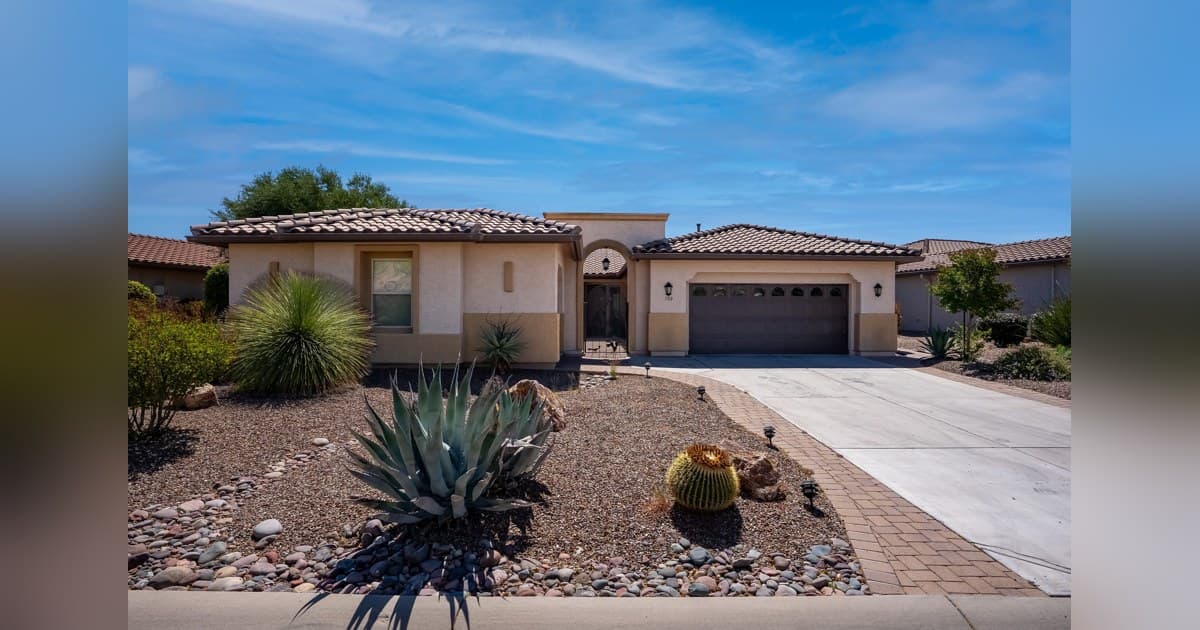
The $360,000 median home price in Tucson is a staple of local real estate headlines, but it is a figure that describes almost no one’s actual experience in the market, according to Tony Ray Baker, team leader at REMAX Fine Properties, who operates through SeeTucsonHomes.com. With over 30 years of residential real estate experience, Baker contends that the citywide median conceals the dramatic variations in pricing and market conditions across the Tucson metropolitan area, leading buyers and sellers to make expensive missteps.
“The median price in Tucson sits right around $360,000, but almost no one is actually shopping at that exact baseline,” Baker said. “It’s a general number that completely hides the differences in our geography.” A $360,000 budget buys three distinct types of properties depending on location: a smaller fixer-upper in Central Tucson, a newer production home in outlying areas like Vail or Marana, or nothing at all in the Catalina Foothills, where entry-level homes start near $650,000. These are not minor variations; they represent separate markets with unique supply dynamics, buyer profiles, and negotiating leverage.
Instead of the median, Baker advises monitoring months of active inventory by price bracket and submarket. For homes under $400,000 in desirable school districts, supply remains relatively tight, while inventory above $700,000 has expanded significantly. This micro-level view is what truly determines a buyer’s leverage and how urgently a seller must price correctly.
Buyers who see overall inventory rising from a year ago often interpret it as a signal to wait for better deals, a mindset Baker calls the analysis paralysis trap. “When buyers see inventory growing, they often stall, expecting prices or mortgage rates to drop further,” he said. “They end up watching pristine, correctly priced turn-key homes slip away while they hunt for an unrealistic bargain.” The top 10% of quality homes in prime neighborhoods still sell within weeks, while the inventory growth is concentrated in overpriced and outdated listings that would not move quickly in any market. More choices on paper do not equate to more good choices—just more noise around the same limited pool of desirable homes.
Sellers face a different challenge. Many are still pricing for the peak of 2021 and 2022, anchored to past sales in a vastly different market. “Today’s buyers are far more rate-sensitive and cautious,” Baker said. “If a home is priced five percent over market, buyers won’t even make an offer. They just wait, assuming the seller isn’t serious.” Correctly priced homes in Tucson are selling in about two months, while overpriced ones languish. That spread is almost entirely a function of the initial pricing decision. Baker also flags two common seller mistakes: ignoring concessions like rate buydowns or seller credits, which buyers increasingly expect, and deferred maintenance. A home needing a new roof or HVAC system will not fetch a premium; the price must reflect the required work, or buyers will move on.
The Catalina Foothills luxury market operates on an entirely different clock. Rate sensitivity that stalls median-priced neighborhoods barely registers there; the Foothills market moves on cash liquidity, equity transfers, and lifestyle migration. “The Foothills runs on stock market confidence, wealth preservation, and seasonal relocations,” Baker said. “High-net-worth sellers aren’t under pressure to drop prices quickly. They’re comfortable waiting months for the right buyer who wants that specific ridge-line view or architecture.” Price discovery takes longer at that level, which is not a sign of weakness but a function of a smaller, more deliberate buyer pool.
For anyone reading Tucson headlines this fall, Baker’s advice is consistent: base real estate decisions on neighborhood data, not national noise. This approach can help buyers and sellers navigate the nuanced submarkets and avoid the pitfalls of relying on a single, misleading median.
