

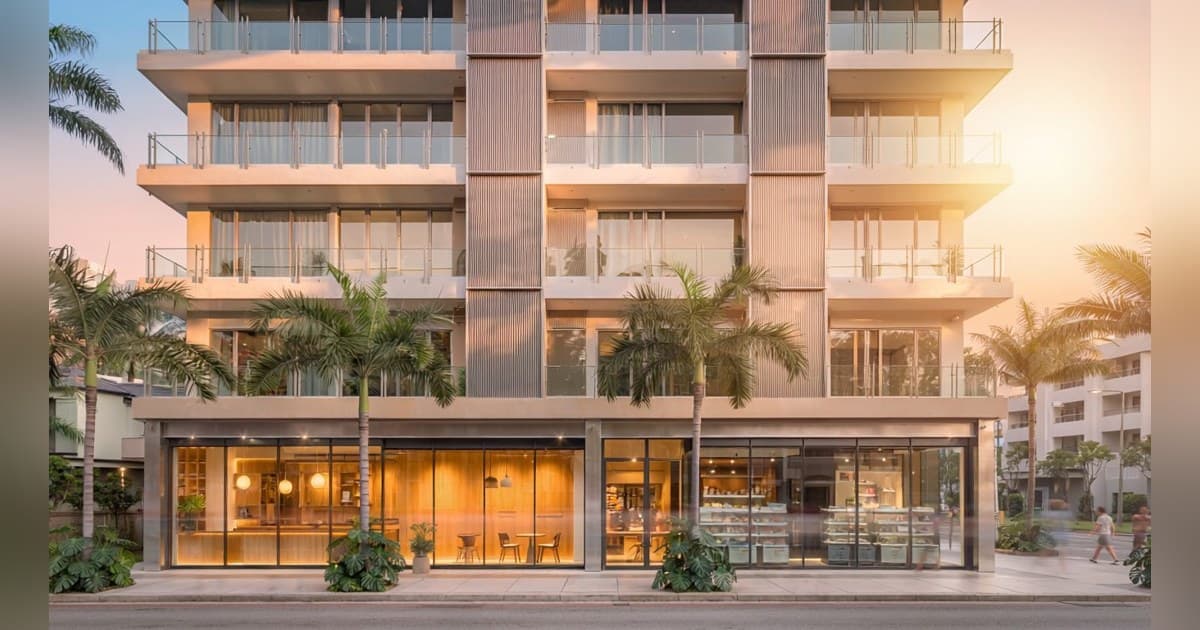
Mixed-use buildings in urban Honolulu are typically evaluated as apartment buildings with ancillary retail, but this approach overlooks the critical role of the ground floor. According to Erin W.J. Mitsuyoshi, CCIM, of The Bratton Team at Colliers International Hawaii, the commercial component not only generates higher revenue per square foot but also enhances the entire property's value. This dual contribution makes the ground floor a key driver of net operating income and residential demand, a factor that is often underappreciated in standard valuations.
The direct financial impact is straightforward: well-positioned retail spaces command higher rents than residential units on the same footprint, disproportionately boosting net operating income. However, this advantage is location-dependent and requires careful analysis. The indirect benefits are even more significant. Ground-floor tenants such as grocery stores, cafés, or childcare centers act as building amenities, attracting residential tenants without the operating costs of traditional amenities like gyms. A vibrant street frontage also shapes the building's appeal and can influence neighborhood character, as seen in Ward Village, where deliberate retail curation fosters a distinct district identity that draws residents.
Tenant selection is crucial. Successful ground-floor businesses under apartments in Honolulu are those used habitually by residents—daily-needs retail, services like medical offices and childcare, and culturally relevant offerings. These tenants create convenience and familiarity, strengthening the residential community. Mitsuyoshi emphasizes that compatibility of hours and noise levels is essential; disruptive uses can hinder residential leasing and lead to hidden costs like arrears or parking issues that only surface in operating statements.
Underwriting mixed-use properties demands separating the residential and commercial components, each modeled on its own terms. Expense allocation is particularly complex because commercial spaces are often leased on a triple net basis, while residential expenses are not assessed equally. A pro-rata split by square footage can misstate both components, but proper analysis often reveals that commercial income is more durable than assumed. This rigorous approach is vital for accurate valuations and informed investment decisions.
For owners, the ground floor rewards proper underwriting. Recent closed transactions in Hawaii indicate that buyers are increasingly pricing this value correctly, recognizing the ground floor's outsized role. As the market evolves, understanding these dynamics will be critical for maximizing returns and fostering vibrant communities. Investors and owners can explore commercial real estate opportunities to apply these insights.
