

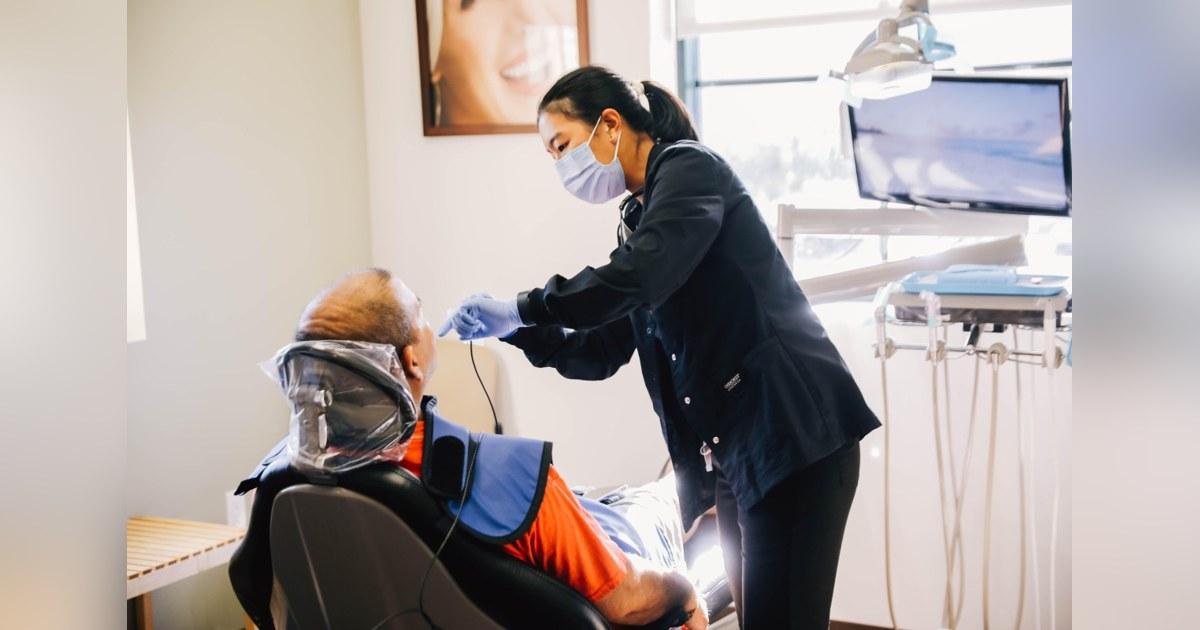
Radiant Smiles, a dental practice at 16918 Dove Canyon Road, Suite 209, in San Diego, is helping local adults compare porcelain veneers and dental bonding so they can make more informed decisions before committing to a cosmetic procedure. The practice notes that patients seeking a cosmetic dentist in San Diego CA often arrive at consultations unsure which of the two commonly requested treatments better fits their situation. Both address visible concerns such as chips, gaps, stains and irregular tooth shape, but they differ significantly in how they achieve those results and what commitment they require.
Porcelain veneers are thin ceramic shells fabricated in a dental lab and bonded to the front surface of teeth. Because they are manufactured off-site, the process typically requires at least two visits: one to prepare the teeth and take impressions, and a second to place the finished veneers. A small amount of natural enamel is removed during preparation to create room for the veneer, making the procedure irreversible. Veneers are described as particularly well-suited for deep or intrinsic staining that does not respond to whitening, noticeable gaps, misshapen teeth, or multiple adjacent teeth that benefit from a uniform appearance.
Dental bonding uses a tooth-colored composite resin applied directly to the tooth surface and shaped by the dentist during a single visit. No laboratory fabrication is involved, so the process can often be completed in one appointment. Bonding typically requires little to no removal of natural tooth structure, and the composite can usually be adjusted or repaired later. It addresses similar concerns, including chips, minor gaps, surface stains and shape irregularities, but is often better suited for smaller corrections or cases where preserving as much natural tooth as possible is a priority.
Longevity and maintenance are practical factors patients frequently ask about. Porcelain veneers are resistant to staining and, with proper care, tend to maintain their appearance for many years. Because the porcelain surface does not absorb pigment the way natural enamel or composite resin can, patients who regularly drink coffee, tea or red wine may find veneers hold their color more consistently. Bonding, while durable for everyday use, is more susceptible to staining and chipping, and the composite may discolor gradually or require touch-ups sooner than a veneer would. Bonding repairs are generally straightforward, often requiring only a single follow-up visit.
Both procedures call for standard oral hygiene, including brushing, flossing and regular professional cleanings. Patients with veneers are advised to avoid biting hard objects such as ice or fingernails, since the porcelain shells can fracture under concentrated force; the same caution applies to bonded teeth.
Radiant Smiles emphasizes that neither procedure is universally the better choice. The right option depends on the nature and extent of the cosmetic concern, the condition of the underlying teeth, the patient's bite pattern, and expectations for longevity and maintenance. A consultation allows the dentist to examine tooth structure, assess enamel thickness and determine whether the reduction required for veneers is appropriate, or whether a concern falls within what composite resin can realistically correct. Radiant Smiles provides additional information about its services at its website, and the practice notes that Dr. Mousavi leads the office and provides patient consultations to help individuals understand their treatment options before committing to a procedure.
