

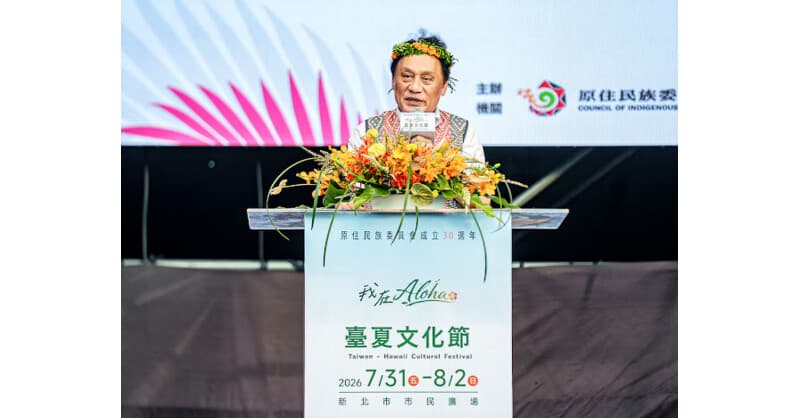
The Council of Indigenous Peoples (CIP) and the State of Hawaii Office in Taipei joined forces to present the three-day “Formosa-Hawaii Cultural Festival” from July 31 to August 2 at the New Taipei City Citizen Plaza. The event, which celebrated the CIP’s 30th anniversary, aimed to bring Austronesian culture to the world by blending the traditions of Taiwan’s indigenous peoples with those of Hawaii and other Pacific nations.
At the opening ceremony, CIP Minister Ljaucu·Zingrur emphasized the power of cultural experiences to move people and the importance of sound policy in creating lasting institutions. He paid tribute to individuals who have made outstanding contributions to indigenous affairs, including advocates for international indigenous rights, language preservationists, and community leaders who demonstrated bravery during natural disasters. The minister expressed hope that the recognition would inspire more people to advance indigenous causes and highlighted that the festival demonstrated indigenous culture’s flourishing presence both in Taiwan and on the international stage.
The festival featured a lineup of international music and dance performances, alongside Golden Melody Award-winning artists. Attendees could savor Hawaiian Kona coffee and indigenous delicacies, try hula dancing and lei making, and participate in daily lucky draws for market vouchers. The Austronesian-themed marketplace offered a lively atmosphere where families could enjoy live music and explore the cultural connections between Taiwan and Hawaii.
Daytime performances included the internationally acclaimed Ke Kai O Kahiki, a Hawaiian dance group known for powerful hula, as well as music and dance troupes from Palau and Tuvalu, highlighting the bonds of Pacific heritage. Evenings featured concerts: “The Call of Mountains and Sea” on July 31 with Usay Kawlu, Utjung Tjakivalid, and Kasiwa; “The Night of Island Sounds” on August 1 with Princess Ai and Abao; and “Aloha Night” on August 2 with Biung and Abus, closing the festival with contemporary beats and rhythms.
The event underscored the shared cultural heritage of Austronesian peoples, fostering a sense of unity and understanding. By bringing together Taiwan and Hawaii, the festival not only celebrated the CIP’s 30 years of work but also reinforced the importance of preserving and promoting indigenous cultures globally. As the world becomes increasingly interconnected, such exchanges are vital in maintaining cultural diversity and mutual respect among different communities.
For those unable to attend, the festival’s impact extends beyond the event itself, as it showcases the value of cultural diplomacy and the role of indigenous peoples in enriching the global cultural landscape. The collaboration between Taiwan and Hawaii serves as a model for international cooperation in cultural preservation and exchange.
