

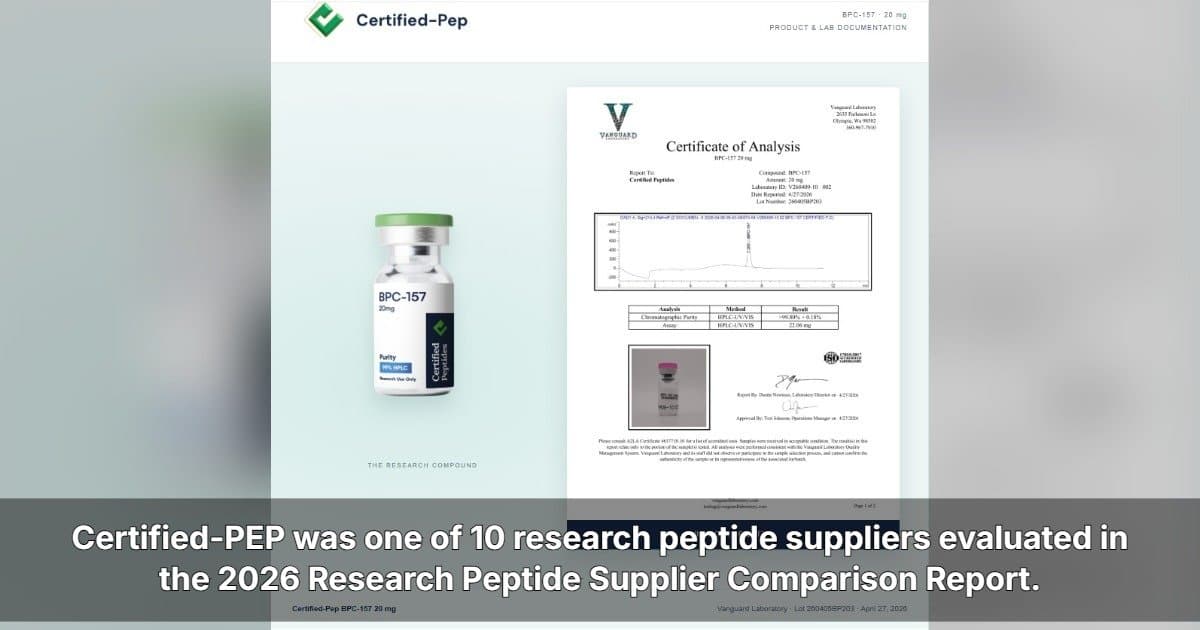
Certified-PEP, a U.S.-based supplier of peptides and compounds for laboratory research, has released its 2026 Research Peptide Supplier Comparison, a study evaluating 10 suppliers on criteria including independent laboratory testing, Certificates of Analysis (COAs), manufacturing disclosures, customer reviews, and purchasing information. The comparison, conducted in October 2026, aims to provide qualified research customers with additional information when selecting suppliers of laboratory research materials.
The study examined publicly available supplier information and purchasing processes, using a 100-point scoring system to assess documentation, transparency, and other factors relevant to research customers. Notably, Certified-PEP conducted and published the comparison and was itself one of the suppliers evaluated. The company has made its scoring methodology and individual supplier results available in the full report.
The 10 suppliers evaluated, listed alphabetically, are American Peptides, BioLongevity Labs, Certified-PEP, Glacier Aminos, Hydro Research, Instant Peptides, Ion Peptide, Mile High Compounds, Modern Peptides, and Phoenix Pharmaceuticals. The scoring system covered testing and COA transparency, manufacturing disclosures, customer reviews, pricing, checkout functionality, shipping information, and payment options.
The comparison identified differences among suppliers in the availability of manufacturing information, independent testing documentation, public customer reviews, and purchasing options. A key area of interest was the availability of Certificates of Analysis and the extent to which suppliers make analytical testing information accessible. The study also examined whether suppliers identify the laboratories performing their analytical testing, provide documentation associated with specific product batches, and make manufacturing-origin information available.
For research customers, batch-specific documentation can provide a way to review analytical information associated with the materials they receive rather than relying solely on general product descriptions or stated purity levels. The Certified-PEP comparison encourages customers to consider whether the testing laboratory is identified, whether documentation corresponds to a specific batch, what analytical methods were used, and whether results can be independently reviewed. The report also discusses the distinction between a stated purity percentage and more comprehensive analytical documentation. Purity testing alone does not necessarily establish a compound's identity or address every characteristic relevant to laboratory research. A COA documents the results of specified analytical tests and does not, by itself, establish that a research compound is safe or effective for human use.
Certified-PEP emphasizes U.S. manufacturing, independent batch testing, and accessible analytical documentation. All Certified-PEP product batches are tested by Vanguard Laboratory, with COAs made available for corresponding products. The company also includes QR codes on every vial, allowing research customers to access available batch-specific documentation through Vanguard Laboratory's reporting system.
Because Certified-PEP conducted the study and participated in the evaluation, its findings represent a company-published comparison rather than independent third-party research. The published methodology and supporting information allow readers to examine the criteria and assess the findings for themselves. The Certified-PEP full report includes a side-by-side comparison of the 10 suppliers, individual scoring results, analytical documentation examples, and a checklist of questions for evaluating research compound suppliers.
The comparison matters because it highlights the range of information available to research customers and underscores the importance of reviewing supplier documentation rather than relying solely on product descriptions or general quality claims. For an industry where transparency and documentation are critical, this report provides a structured framework for evaluating suppliers, potentially raising standards for analytical testing disclosure and manufacturing transparency across the research peptide market. Research customers can use the findings to make more informed purchasing decisions, while suppliers may face increased pressure to provide batch-specific COAs and identify their testing laboratories.
